
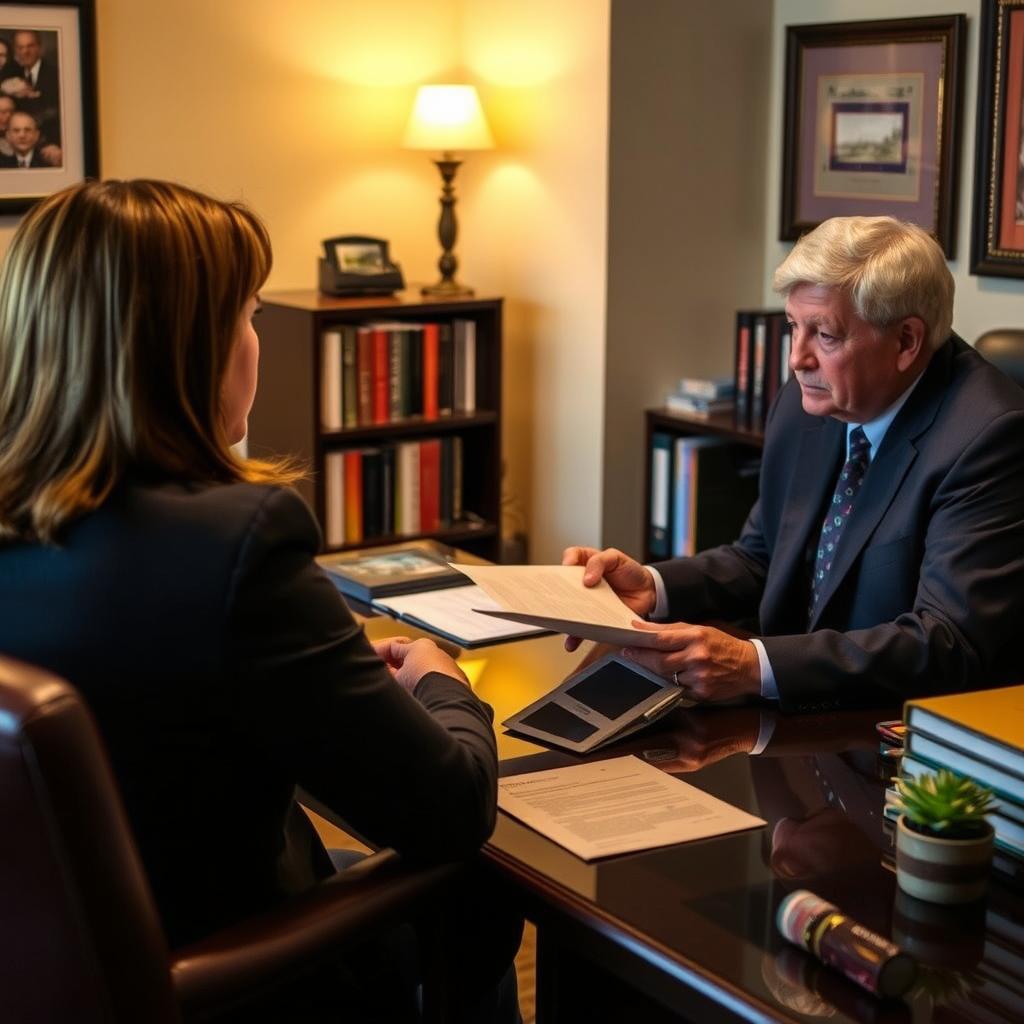
Supervised Visitation Lawyer Rappahannock County, VA
When a Virginia court has concerns about a parent’s ability to provide a safe or appropriate environment during parent-child contact, it may order supervised visitation. In Rappahannock County, these orders arise in the Juvenile and Domestic Relations District Court—whether in a standalone custody or visitation proceeding, as part of a divorce, or following a protective order. Because supervised visitation restricts the time a parent spends with a child and places it under the watch of a third party, the arrangement can feel overwhelming. Parents often worry about how the order will affect their relationship with their child and whether the supervision can ever be removed. Mr. Sris and his Of Counsel represent mothers, fathers, grandparents, and other relatives in supervised visitation matters throughout Rappahannock County. The firm’s Fairfax Location serves clients from Washington, Sperryville, Flint Hill, and surrounding communities, appearing routinely before the Rappahannock County Juvenile and Domestic Relations District Court. Reach Law Offices Of SRIS, P.C. at (888) 437-7747 to request a consultation about your supervised visitation matter. Law Offices Of SRIS, P.C. – Advocacy Without Borders.
What Supervised Visitation Means in Rappahannock County
In Virginia, visitation—also called parenting time—is governed by the best interests of the child standard set out in Va. Code § 20-124.3. When a judge determines that unsupervised visitation could place the child at risk, the court may order that all contact between a parent and the child take place in the presence of a neutral third party. The supervisor may be a professional agency, a family member approved by the court, or a facility designated by the local Department of Social Services. Supervised visitation is not a punishment; it is a safety measure designed to preserve the parent-child relationship while addressing concerns about a parent’s behavior, living situation, or history. The court retains authority to modify the arrangement as circumstances change, and a parent who demonstrates consistent, appropriate conduct can petition for a graduated plan experienced to unsupervised time.
Rappahannock County’s family law matters are divided between two courts. Standalone custody, visitation, child support, and protective order cases proceed in the Rappahannock County Juvenile and Domestic Relations District Court, located at 250 Gay Street, Suite 1, in Washington, Virginia. When a divorce is pending, the Rappahannock County Circuit Court—which shares the same courthouse address—handles the divorce and related equitable distribution, but visitation disputes within the divorce may be heard in the J&DR Court. This dual-court structure means a supervised visitation issue could appear in either forum. The county is part of Virginia’s Twentieth Judicial District, a rural circuit that stretches along the eastern edge of Shenandoah National Park and includes the towns of Sperryville and Flint Hill. The court applies the same statewide statutory factors, but local practice and judicial expectations can influence how a supervised visitation case unfolds. Understanding both the law and the local court environment helps a parent or relative present the strong $1.
How Mr. Sris and His Of Counsel Handle Supervised Visitation Cases
Every supervised visitation matter begins with a thorough review of the court order, the allegations or concerns that led to it, and the family’s history. Mr. Sris and his Of Counsel gather medical records, school reports, witness statements, and any prior custody evaluations to build a complete factual picture. In many cases, the court’s order follows a report from Child Protective Services, a domestic violence allegation, or a substance-abuse concern. The legal team works to understand precisely what the court needs to see before it will consider relaxing or lifting the supervision requirement. Where possible, they negotiate with the other parent’s counsel or the guardian ad litem to propose a step-down plan that includes progressively less restrictive supervision while still protecting the child’s welfare. If an agreement cannot be reached, Mr. Sris and his Of Counsel are prepared to present evidence and examine witnesses at a formal hearing before the J&DR Court.
Throughout the process, the focus remains on the child’s best interests while protecting the parent’s constitutional right to maintain a relationship with the child. The firm helps parents understand what behaviors and documentation the court will find persuasive—such as completion of parenting classes, substance-abuse counseling, or a stable housing and employment record. They also assist clients in identifying appropriate supervisors, whether a family member or a professional visitation center, and in presenting that plan to the court. Because supervised visitation orders often interact with other family law issues—custody determinations, spousal support, or protective orders—the team coordinates strategy across all related proceedings. The timeline for modifying supervised visitation depends on the court’s calendar and the complexity of the circumstances, but proactive preparation accelerates the process.
About Mr. Sris and His Of Counsel Team
Mr. Sris, Owner and Founder of Law Offices Of SRIS, P.C., has practiced family law and litigation since 1997. A former prosecutor, he brings a trial-tested perspective to every visitation and custody dispute. Mr. Sris is admitted to practice in Virginia, Maryland, the District of Columbia, New Jersey, and New York. He testified before the Virginia House Courts of Justice Committee in support of 2019 HB 635 (chief patron Del. David Bulova). Mr. Sris and his Of Counsel bring over 120 years of combined legal experience and have achieved 4,739+ documented firm-wide results. Results may vary.
Mr. Sris is joined by a team of Of Counsel attorneys who contribute deep litigation experience in family law, criminal defense, and child welfare matters. Together, the team handles supervised visitation cases across Virginia’s Northern and Piedmont regions, including Rappahannock County. The firm’s multi-state practice and round-the-clock phone availability mean clients can reach assistance when they need it. Se habla español. Tamil, French, and Portuguese are also spoken.
Frequently Asked Questions
What is supervised visitation and when is it ordered in Rappahannock County?
Supervised visitation is a court-ordered arrangement that requires a neutral third party to be present during a parent’s contact with the child. A judge in the Rappahannock County Juvenile and Domestic Relations District Court may order supervised visitation when there is evidence of abuse, neglect, substance dependency, mental health instability, or a history of domestic violence that raises concerns about the child’s safety. The order can be entered in a standalone custody or visitation case or during a divorce proceeding. The supervisor’s role is to observe the visit, ensure the child’s wellbeing, and report back to the court if requested. The length and frequency of the supervised visits depend on the specific facts and the court’s assessment of risk.
How does the process for supervised visitation work in Rappahannock County?
Once a supervised visitation order is entered, a supervisor is selected and a visitation schedule is set, often with the involvement of the guardian ad litem or both parents’ attorneys. In Rappahannock County, the J&DR Court issues the order specifying the supervisor’s identity or the process for selecting one, the location of the visits, and the duration. Parents typically must complete any prerequisite services—such as counseling or parenting classes—before visits begin. The supervisor observes each session and may document interactions. If either parent believes the supervised arrangement is no longer necessary, they can file a motion to modify. The court then holds a hearing to decide whether circumstances have changed sufficiently to alter or lift the supervision requirement.
Can supervised visitation orders be modified?
Yes, a parent or the child’s guardian can petition the court to modify a supervised visitation order when there has been a material change in circumstances. To succeed, the moving party must present evidence that the conditions that originally prompted supervision have been resolved. Common changes include completion of a substance-abuse treatment program, a sustained period of stable employment and housing, or a favorable report from the supervisor. In Rappahannock County, a parent may request a step-down plan that gradually reduces supervision—for example, moving from a professional agency to a family member, then to unsupervised day visits, and ultimately to overnight stays. The court retains broad discretion and will only modify the order if it serves the child’s best interests.
Do I need a lawyer for a supervised visitation case?
While you are not legally required to have a lawyer, supervised visitation cases involve complex evidentiary and procedural rules that can be difficult to manage alone. An attorney can present the evidence the court needs to see and cross-examine adverse witnesses effectively. In Rappahannock County, supervised visitation orders often interact with other legal matters—custody, protective orders, or divorce—so mistakes in one proceeding can affect the others. Mr. Sris and his Of Counsel help parents organize the documentation, identify appropriate supervisors, and frame a modification request that aligns with both the statutory best-interest factors and local court expectations. For a consultation, reach Law Offices Of SRIS, P.C. at (888) 437-7747.
How long does supervised visitation typically last?
There is no fixed term; supervised visitation remains in place until the court finds that the concerns that led to the order have been adequately addressed. In some cases, supervision may last a few months while a parent completes a short-term program and demonstrates stability. In more complex situations, it can continue for a year or longer. The timeline depends on the parent’s progress in meeting the conditions the court outlined, the supervisor’s reports, and the age and needs of the child. A parent who proactively follows the court’s recommendations and maintains open communication with the guardian ad litem generally moves through the process more quickly.
Who can be a supervisor and what are the costs?
The court may approve a family member, a professional visitation center, or a social-services agency to act as the supervisor. Costs vary widely. A family member supervisor often works at no charge, but the court must be satisfied that the relative is neutral and capable of protecting the child. Professional supervision agencies charge fees based on the location, duration, and level of monitoring required; some offer sliding-scale rates. The supervisor’s fees are typically paid by the visiting parent, though in some circumstances the court may divide the cost. Contact Law Offices Of SRIS, P.C. at (888) 437-7747 to discuss how your supervised visitation arrangement can be structured affordably and in compliance with the court’s order.
Serving these communities and more: Family Law lawyer in Fairfax County | Family law attorney in Prince William County | Family Law matters in Manassas City | Family lawyer Falls Church City
Virginia family law resources: Virginia Code Title 20 – Domestic Relations | Va. Code § 20-124.3 – Best interests of the child | Virginia Juvenile and Domestic Relations District Court
Attorney advertising. Prior results do not guarantee a similar outcome. Results may vary.
Case results depend on a variety of factors unique to each case.