
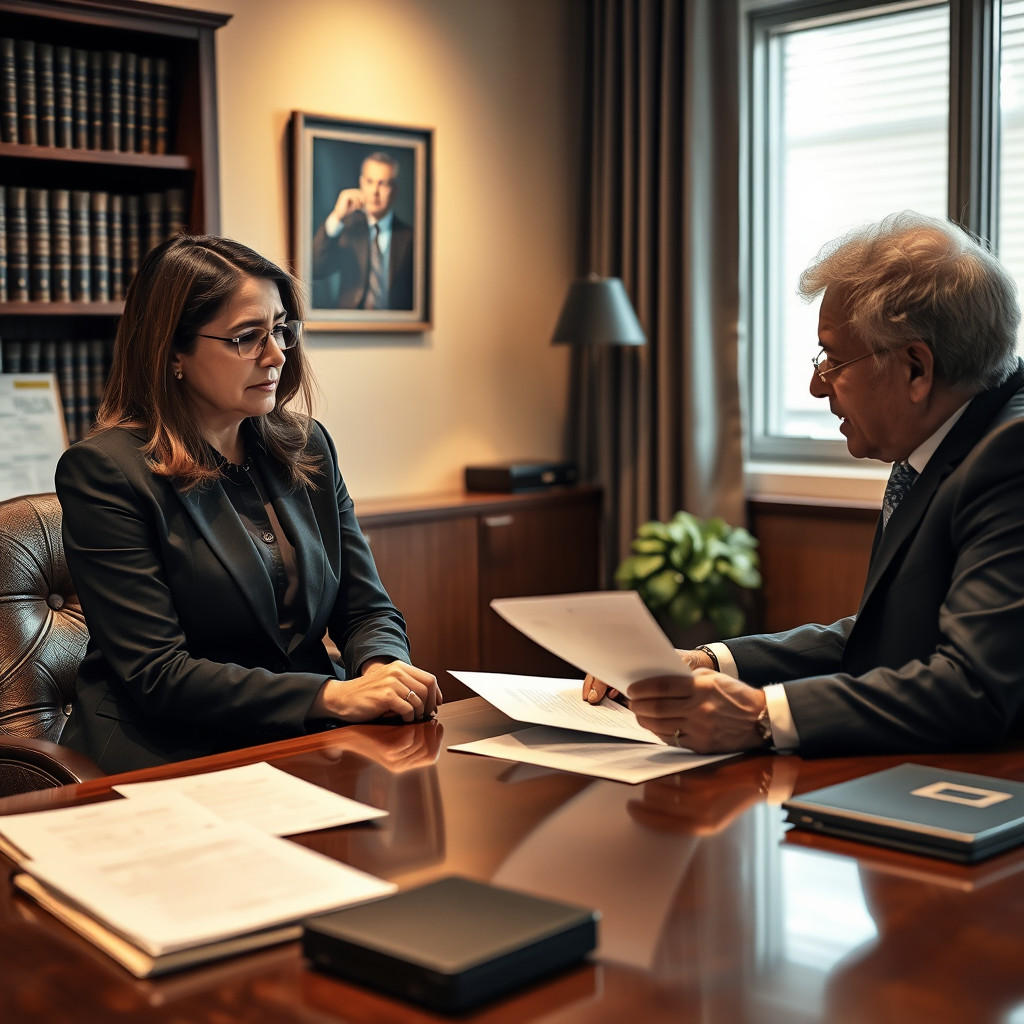
Rehabilitative Alimony Lawyer in Cleveland Park, DC
Navigating the complexities of spousal support and rehabilitative alimony within the District of Columbia requires specialized legal knowledge. Law Offices Of SRIS, P.C. provides dedicated representation for clients facing these sensitive family law matters in the Cleveland Park area and throughout the greater D.C. Region.
Rehabilitative alimony is a form of temporary spousal support designed to bridge the financial gap between separating spouses while one party works toward achieving self-sufficiency. The specific guidelines and duration of this support are determined by the unique facts of your case and the discretion of the presiding court.
(888) 437-7747
By appointment only. Calling our location allows you to speak with an attorney regarding your specific situation.
What is Rehabilitative Alimony in the District of Columbia?
Rehabilitative alimony, often referred to as temporary spousal support, is a financial arrangement established by a court to assist one spouse—typically the lower-earning spouse—in becoming financially independent following the dissolution of a marriage. Unlike permanent alimony, which may last for a set period or indefinitely, rehabilitative support is inherently temporary and goal-oriented.
In the District of Columbia, the determination of whether rehabilitative alimony is necessary, and what its terms should be, depends heavily on several factors, including the length of the marriage, the disparity in the parties’ incomes, and the earning capacity of the supported spouse. The court assesses the financial needs of both parties to ensure that the support provided serves a clear purpose: enabling the recipient to gain education, training, or employment necessary to sustain themselves long-term.
The legal process requires detailed financial disclosure from both sides. An attorney experienced in D.C. Family law can help gather documentation regarding income, debts, educational achievements, and potential earning capacity, which are all critical components the court will review when making its final determination on support.
The DC Family Law Process for Establishing Alimony
The process for seeking or defending against alimony in the District of Columbia is governed by specific family law statutes and court procedures. It begins with filing the appropriate petition with the D.C. Superior Court, which officially notifies all involved parties and initiates the judicial review process.
Once the case is filed, both parties are generally required to participate in mandatory mediation or financial counseling sessions. These preliminary steps are designed to encourage settlement outside of a full trial, which is often the most favorable outcome for all involved. If mediation fails to resolve the dispute, the matter proceeds through discovery, where attorneys exchange detailed financial records and evidence.
During the hearing before the judge, the attorney presents evidence supporting the requested support amount and duration. The court then weighs the evidence against established D.C. Guidelines to issue a final order. Because the law is highly fact-specific, the timeline varies by case complexity and court scheduling, but diligent preparation is key to achieving a favorable outcome.
How Mr. Sris and the Firm’s Of Counsel Attorneys Handle Rehabilitative Alimony Cases in Cleveland Park, DC
Handling rehabilitative alimony cases in Cleveland Park, DC, requires more than general knowledge of family law; it demands an intimate understanding of the D.C. Superior Court’s specific procedural expectations and judicial tendencies. Mr. Sris and the firm’s Of Counsel attorneys approach these matters by first conducting a comprehensive financial audit of both parties. This initial deep dive ensures that every potential source of income, debt, and future earning capacity is accounted for, providing a robust foundation for negotiation or litigation.
Our strategy focuses on framing the support not merely as a handout, but as a structured, time-bound investment in the supported spouse’s future. By presenting evidence of the recipient’s commitment to career advancement—such as enrollment in training programs or securing employment—we help the court view the support as a mechanism for economic self-sufficiency rather than perpetual dependency. This nuanced approach is vital for negotiating terms that are both fair and enforceable under D.C. Law, ultimately leading to a more stable resolution for the entire family unit.
About Mr. Sris and the Firm’s Of Counsel Attorneys
Mr. Sris, Owner and Founder of Law Offices Of SRIS, P.C., brings decades of dedicated legal advocacy to family law matters across multiple jurisdictions. With a background that includes serving as a former prosecutor, Mr. Sris possesses a unique perspective on the adversarial nature of litigation, allowing him to anticipate opposing counsel’s arguments while remaining focused on the client’s long-term best interests. His practice is built upon a foundation of meticulous preparation and deep commitment to achieving favorable outcomes for his clients.
Mr. Sris and the firm’s Of Counsel attorneys bring extensive combined legal experience, serving clients who require experience across five major jurisdictions: Virginia, Maryland, the District of Columbia, New Jersey, and New York. The firm’s Of Counsel attorneys are highly specialized practitioners who work collaboratively with Mr. Sris to provides clients with counsel at the highest level. This collective experience allows the firm to navigate complex jurisdictional overlaps and unique statutory requirements inherent in family law matters.
Frequently Asked Questions About Rehabilitative Alimony in DC
What is the primary goal of rehabilitative alimony?
The primary goal of rehabilitative alimony is to provide temporary financial support that bridges the income gap between separating spouses, allowing the supported party time and resources to gain the education or employment necessary for long-term self-sufficiency.
Does DC law mandate rehabilitative alimony?
DC law does not mandate a specific type of support; rather, the court determines if temporary support is needed based on the financial disparity and the ability of the supported spouse to become self-sufficient over time. The court’s discretion is guided by the best interests of the parties.
How long can rehabilitative alimony last in DC?
The duration of rehabilitative alimony is not fixed and depends entirely on the specific facts presented to the court, such as the length of the marriage and the progress made toward self-sufficiency. The judge determines a timeframe that is appropriate for the parties’ financial needs.
What documentation should I prepare for my alimony hearing?
You should prepare comprehensive documentation, including pay stubs, tax returns, records of educational enrollment, and any evidence of employment history or career training. Gathering this material allows your attorney to build the strong case regarding your current and future earning capacity.
Can I negotiate a temporary support agreement before filing?
Yes, pre-filing negotiation is often advisable as it can save time and expense. However, any agreement reached must be carefully drafted by an attorney to ensure it is legally sound, enforceable in the D.C. Courts, and accurately reflects the parties’ intentions.
What happens if I fail to meet my educational goals while receiving support?
If the court determines that the supported spouse is not actively pursuing the agreed-upon rehabilitative goals, the court may review and potentially modify or terminate the support order. Maintaining consistent effort and communication with your attorney is crucial.
Is rehabilitative alimony the same as permanent spousal support?
No, they are distinct concepts. Permanent spousal support is designed for long-term or indefinite financial maintenance, whereas rehabilitative alimony is explicitly temporary and tied to a measurable plan for financial improvement.
What if my spouse refuses to cooperate with financial disclosure?
If your spouse refuses to provide necessary financial documentation, your attorney can petition the court to compel discovery. The court has mechanisms in place to ensure that all relevant financial information is presented for a fair determination of support.