
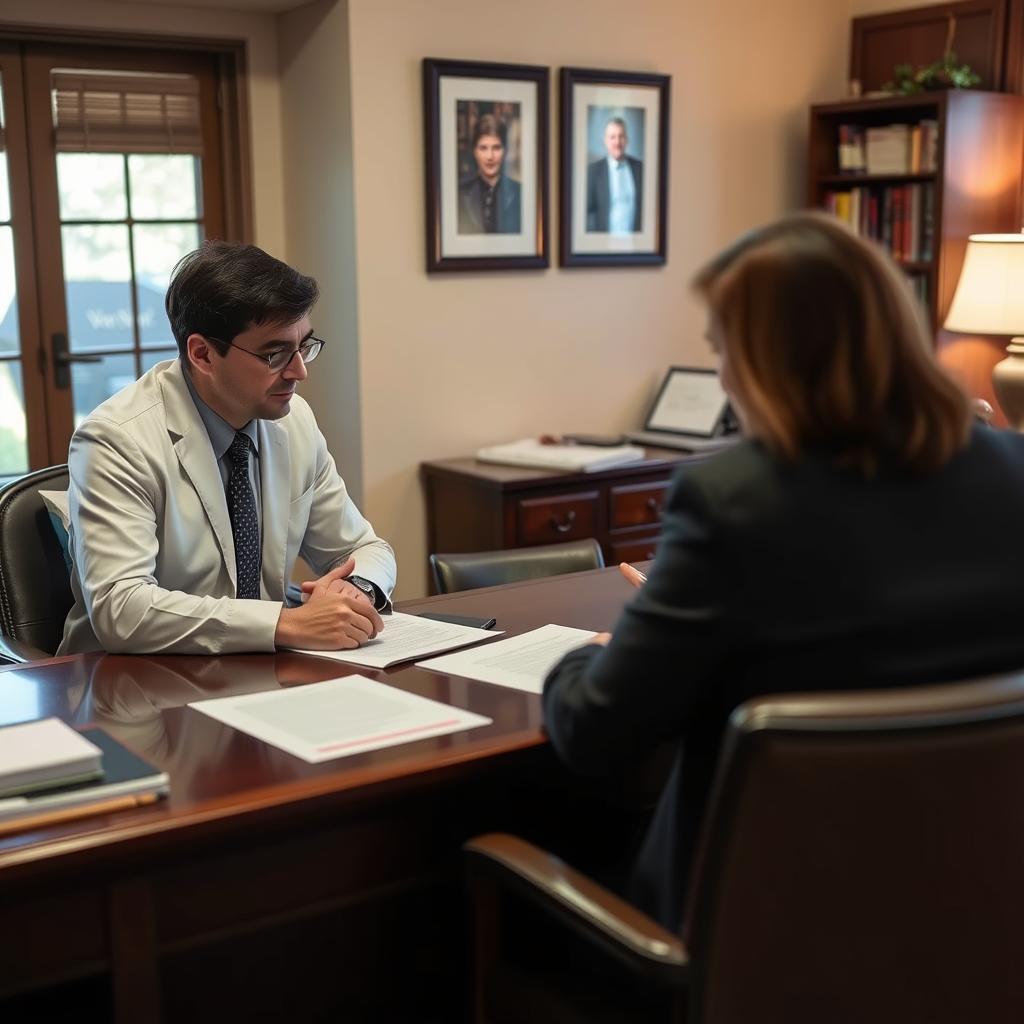
Property Division Lawyer Fluvanna County, VA
Dividing marital property during a divorce in Fluvanna County involves applying Virginia’s equitable distribution rules under Va. Code § 20‑107.3. For residents of Palmyra, Fork Union, Lake Monticello, and surrounding communities in the Sixteenth Judicial District, property division questions are decided by the Fluvanna County Circuit Court. The statutory framework examines eleven factors to reach a fair, though not necessarily equal, division of assets and debts. Mr. Sris and the firm’s Of Counsel attorneys assist clients with the identification, classification, and valuation of marital property, whether the case involves a family business, retirement accounts, real estate, or high‑value personal property. To discuss your property division matter, reach Law Offices Of SRIS, P.C. at (888) 437-7747. Law Offices Of SRIS, P.C. – Advocacy Without Borders.
Under Va. Code § 20‑107.3, the court divides marital property based on eleven statutory factors, including each spouse’s contributions to the marriage, the duration of the marriage, and the tax consequences of a proposed division.
Source: Va. Code § 20‑107.3 (equitable distribution). Virginia Code Title 20, Chapter 6, Section 20‑107.3
Reviewed by Mr. Sris, admitted in VA, MD, DC, NJ, and NY.
What Property Division Means in Fluvanna County
Fluvanna County family law cases are heard at the Fluvanna County Circuit Court, located at 72 Main Street, Suite B, in Palmyra. The Circuit Court has exclusive jurisdiction over divorce and equitable distribution under Va. Code § 20‑96. Meanwhile, standalone custody, visitation, and support matters are filed in the Fluvanna County Juvenile and Domestic Relations District Court. When you are going through a divorce, the property division portion of the case proceeds in the Circuit Court alongside the divorce petition itself.
The court follows equitable distribution, not community property. That means the marital estate is divided in a way the court considers fair after examining the evidence. Marital property generally includes assets acquired by either spouse during the marriage, regardless of whose name is on the title. Separate property—such as assets owned before the marriage, gifts, or inheritances—is typically retained by the owning spouse. However, when separate property has been commingled with marital assets, the classification can become more complex. For high‑asset estates, the court may rely on forensic accountants and business valuation attorneys to determine the accurate value of closely held businesses, professional practices, or complex investment portfolios.
The Fluvanna County Courthouse is accessible from Route 15, Route 6, and Route 53, making it reachable for clients throughout Palmyra, Fork Union, and Lake Monticello. The Sixteenth Judicial District’s procedures allow for negotiated property settlement agreements that, once signed and incorporated into a final decree, avoid a contested trial. Many couples in Fluvanna County resolve property division through a separation agreement that addresses all assets, debts, retirement accounts, and real property, then submit the agreement to the court for approval.
How Mr. Sris and the Firm’s Of Counsel Attorneys Handle Property Division Cases
Mr. Sris and the firm’s Of Counsel attorneys approach property division in Fluvanna County by first identifying all assets and debts, then classifying them as marital, separate, or hybrid. The team works with clients to gather financial records, tax returns, deeds, and account statements to build a complete picture of the marital estate. Where necessary, the firm coordinates with qualified financial professionals—not the firm’s own employees—to prepare business valuations or trace the origin of disputed assets.
Once the property is classified and valued, the legal team applies the eleven factors of Va. Code § 20‑107.3 to develop a position on equitable distribution. Negotiation of a property settlement agreement is often the most efficient path, and the firm prepares comprehensive settlement documents that address not only division but also spousal support and related issues. If the parties cannot agree, the matter proceeds to a hearing before the Fluvanna County Circuit Court, where Mr. Sris and the firm’s Of Counsel attorneys present evidence and argument on behalf of their client. Throughout the process, the goal is to secure a division that reflects the statutory factors and protects the client’s long‑term financial stability.
Because Fluvanna County is a smaller jurisdiction, familiarity with local court practices can help the case move smoothly. Scheduling, motion practice, and the expectations of the bench are known to the firm’s attorneys, who appear regularly in the Sixteenth Judicial District. This local perspective allows the team to anticipate procedural requirements and avoid unnecessary delays.
About Mr. Sris and the Firm’s Of Counsel Attorneys
Mr. Sris, Owner and Founder of Law Offices Of SRIS, P.C., has been practicing since 1997. A former prosecutor, he now concentrates on family law, criminal defense, and related litigation across Virginia, Maryland, the District of Columbia, New Jersey, and New York. He testified before the Virginia House Courts of Justice Committee in support of 2019 HB 635 (chief patron Del. David Bulova), a bill that revised the equitable distribution statute. That firsthand legislative involvement gives him a detailed understanding of how Va. Code § 20‑107.3 operates and where contested issues often arise.
The firm’s Of Counsel attorneys bring extensive combined legal experience to property division matters. Results may vary. Together, Mr. Sris and the firm’s Of Counsel attorneys handle cases ranging from straightforward division of household goods and bank accounts to complex disputes involving business ownership, professional licenses, and multi‑jurisdictional assets. If you need a property division lawyer in Fluvanna County, the team is available to discuss your situation and explain the options available under Virginia law.
Frequently Asked Questions
How is property divided in a Fluvanna County divorce?
Virginia follows equitable distribution, meaning the Fluvanna County Circuit Court divides marital property fairly but not necessarily equally after considering the eleven statutory factors listed in Va. Code § 20‑107.3. Marital property includes assets and debts acquired during the marriage. The court examines each spouse’s contributions, the length of the marriage, the reasons for the divorce, and the economic circumstances of each party, among other factors. Separate property, such as pre‑marital assets and inheritances, generally stays with the owning spouse. An experienced family law attorney can help you identify what is marital versus separate, present valuation evidence, and advocate for a division that reflects the statutory criteria.
What is the difference between marital and separate property in Virginia?
Marital property is property acquired by either spouse during the marriage, regardless of whose name is on the title, while separate property is property owned before the marriage or received by gift or inheritance during the marriage. The classification can become more complicated when separate property is commingled with marital funds or when one spouse claims that an asset increased in value due to marital effort. The Fluvanna County Circuit Court will trace the source of funds and may treat the increase as marital if it resulted from the other spouse’s contributions. Clear documentation and legal guidance can help avoid classification disputes.
Can we reach a property settlement outside of court in Fluvanna County?
Yes, many couples resolve property division through a written separation agreement that is later incorporated into the final divorce decree. A property settlement agreement can address all assets, debts, retirement accounts, and real estate, allowing you to avoid a contested trial. The Fluvanna County Circuit Court will review the agreement for fairness and approve it if it meets statutory requirements. Working with an attorney to draft the agreement helps ensure that all necessary terms are included and that your rights are protected. Even when parties agree on most issues, legal review can catch overlooked items such as tax implications or pension division.
Do I need a lawyer for property division in Fluvanna County?
You are not legally required to hire a lawyer, but property division often involves complex valuation, classification, and legal standards that can affect your financial future. An attorney can identify assets that might otherwise be overlooked, ensure that retirement accounts are properly divided through Qualified Domestic Relations Orders, and negotiate a settlement that accounts for tax liabilities and future needs. If you and your spouse cannot agree, representation at a hearing before the Fluvanna County Circuit Court becomes essential. An experienced property division lawyer can present evidence, examine witnesses, and argue for a division that is favorable under the statutory factors.
How long does property division take in a Virginia divorce?
The timeline depends on whether the parties reach a settlement or proceed to trial, as well as the complexity of the assets involved. If a comprehensive separation agreement is signed, the property division can be finalized along with the divorce decree within the statutory waiting periods after filing. Contested cases, especially those requiring business valuations or expert testimony, may extend several months or longer. The Fluvanna County Circuit Court’s docket and scheduling also affect the pace. A lawyer can help you set realistic expectations and work toward an efficient resolution.
What if my spouse is hiding assets during a Fluvanna County divorce?
If you suspect your spouse is hiding assets, your attorney can use discovery tools such as interrogatories, requests for production of documents, and depositions to uncover concealed or undervalued property. Virginia law requires full financial disclosure, and a party who fails to disclose assets may face sanctions. The court can also consider the concealment when making an equitable division. Forensic accountants may be engaged to trace funds or analyze business records. Acting promptly with the help of an experienced family law attorney increases the likelihood of obtaining a complete picture of the marital estate.
For a consultation about your property division matter in Fluvanna County, reach Law Offices Of SRIS, P.C. at (888) 437-7747.
Related family law pages:
Fairfax County family law lawyer ·
Prince William County family law lawyer ·
Fairfax City family law lawyer ·
Manassas City family law lawyer
Additional resources:
Virginia Code Title 20 — Domestic Relations ·
Fluvanna County Courts
Attorney advertising. Prior results do not guarantee a similar outcome. Results may vary.
Case results depend on a variety of factors unique to each case.