
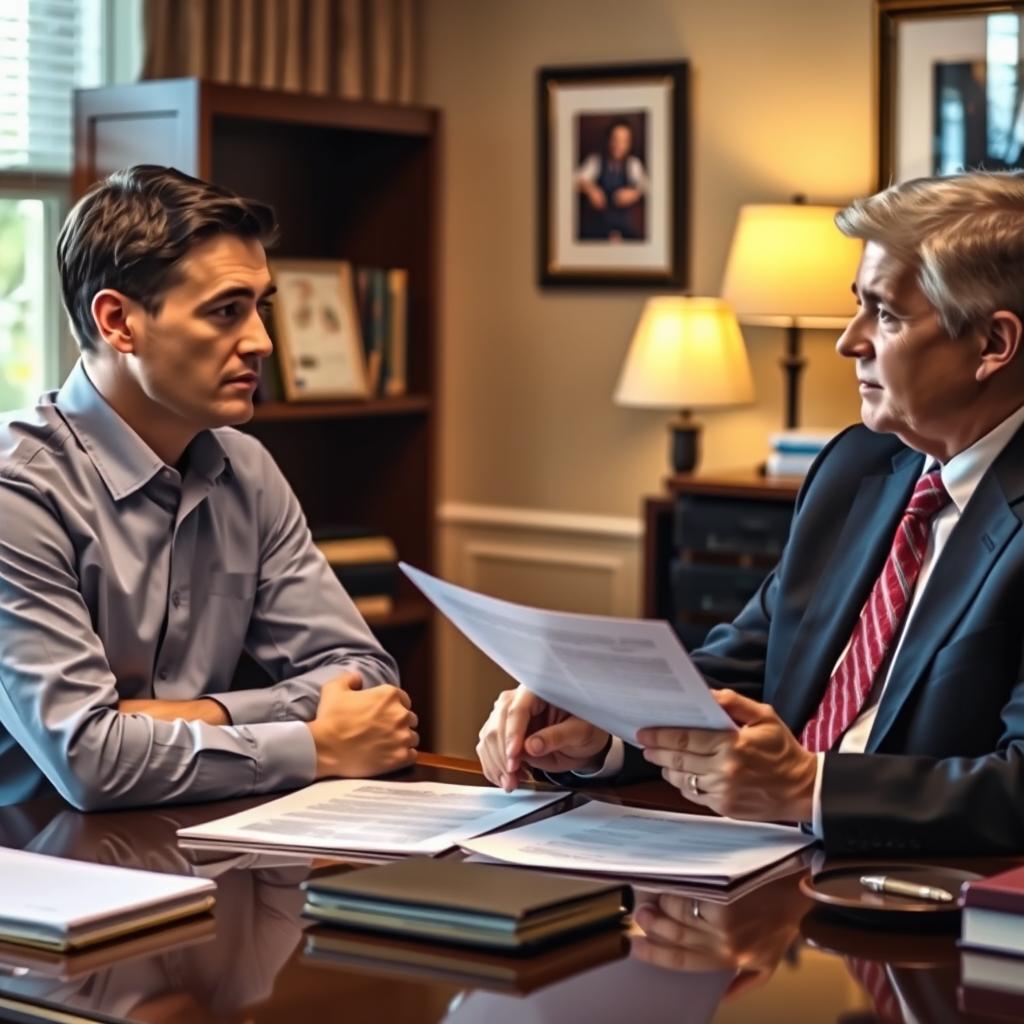
Paternity Rights Lawyer Fauquier County, VA
In Fauquier County, Virginia, paternity rights establish the legal parent-child relationship between a father and his child. For unmarried parents, the biological father does not automatically have legal rights to custody, visitation, or decision-making authority until paternity is legally established. Virginia law, under Va. Code § 20-49.1 et seq., provides several paths to determine paternity: voluntary acknowledgment signed by both parents at the hospital or later, genetic testing ordered by the court, or a judicial finding after a trial. The Fauquier County Juvenile and Domestic Relations District Court hears standalone paternity petitions, while the Fauquier County Circuit Court addresses paternity when it arises in a divorce, equitable distribution, or spousal support matter. Establishing paternity is essential for securing child support under the Virginia guidelines, for protecting a father’s right to custody and visitation, for the child’s inheritance and access to family medical history, and for emotional well-being. If paternity is disputed, legal representation can help navigate the evidentiary requirements and protect your parental interests. Our Fairfax location serves families throughout Fauquier County, including Warrenton, New Baltimore, Bealeton, Marshall, and The Plains. Mr. Sris, Owner and Founder of Law Offices Of SRIS, P.C., and his Of Counsel bring decades of experience in Virginia family law matters to clients in the 20th Judicial District. To discuss your paternity matter, reach Law Offices Of SRIS, P.C. at (888) 437-7747. Law Offices Of SRIS, P.C. – Advocacy Without Borders.
What Paternity Rights Means in Fauquier County, Virginia
For many families in Fauquier County, paternity proceedings are the first step in resolving disputes about child support, custody, and visitation. The Juvenile and Domestic Relations District Court at 6 Court Street in Warrenton handles paternity petitions that are not connected to a divorce. The Circuit Court, also at 6 Court Street, addresses paternity when it is part of a divorce or equitable distribution case. Under Virginia law, a child born to unmarried parents has no legal father until paternity is established. A mother, a man alleging himself to be the father, a child through a guardian, or the Department of Social Services may file a petition to establish paternity.
The process often begins with a complaint or petition filed in the appropriate court. If both parents agree on paternity, they may sign a voluntary acknowledgment of paternity, which becomes legal when filed with the Virginia Department of Social Services Division of Vital Records. This acknowledgment has the same effect as a court order. If there is a dispute, the court may order genetic testing. When test results confirm parentage, the court will enter an order establishing the father’s legal rights and responsibilities. Once paternity is established, the court can address custody and visitation under the trusted-interests-of-the-child factors in Va. Code § 20-124.3, and child support according to the Virginia guidelines. A father gains the right to seek custody or visitation, to be notified of adoption proceedings, and to pass on inheritance and Social Security benefits to the child.
Mr. Sris and his Of Counsel have extensive experience representing clients in Fauquier County paternity matters. They understand the local court procedures and work to resolve paternity issues efficiently, whether through negotiation or litigation. The emotional stakes are high, and a thorough approach helps protect both the client’s rights and the child’s well-being. To discuss your case, reach Law Offices Of SRIS, P.C. at (888) 437-7747.
How Mr. Sris and His Of Counsel Handle Paternity Cases
For paternity matters, Mr. Sris and his Of Counsel take a thorough, client-focused approach. A paternity case can be emotionally charged and legally complex, involving not only the biological relationship but also custody, support, and visitation issues. The team begins by gathering all relevant facts: the circumstances of the child’s conception and birth, any prior acknowledgment of paternity, communications between the parties, and any existing court orders. They review birth certificates, examine any prior paternity actions, and work with accredited genetic testing laboratories to obtain reliable results. When necessary, they challenge test findings that are procedurally flawed.
Once the facts are clear, the attorneys explore resolution options. When both parents agree on paternity, a voluntary acknowledgment or a consent order can be a straightforward path. If a dispute exists, Mr. Sris and his Of Counsel represent clients in negotiations and at hearings before the Fauquier County Juvenile and Domestic Relations District Court or Circuit Court. They present evidence, cross-examine witnesses, and argue the legal standards for parentage. In every case, the goal is to secure a legal determination that protects the client’s rights and the child’s best interests. Throughout the process, the team keeps clients informed and answers questions about what to expect. To schedule a consultation, reach Law Offices Of SRIS, P.C. at (888) 437-7747.
About Mr. Sris and His Of Counsel Team
Law Offices Of SRIS, P.C. was founded in 1997 by Mr. Sris, Owner and Founder, who is a former prosecutor. Mr. Sris has practiced family law across Virginia, Maryland, the District of Columbia, New Jersey, and New York for more than 28 years. He testified before the Virginia House Courts of Justice Committee in support of 2019 HB 635 (chief patron Del. David Bulova). His background in criminal prosecution provides perspective on the evidentiary standards and courtroom advocacy that benefit clients in contested paternity cases.
Mr. Sris is supported by a team of Of Counsel attorneys who are engaged through Excella and bring substantial family law experience. Together, Mr. Sris and his Of Counsel bring over 120 years of combined legal experience, supported by 4,739+ documented firm-wide results. Results may vary. The firm has documented 73 case results across all practice areas in Fauquier County, achieving a 97% favorable outcome rate.
Frequently Asked Questions
How is paternity established in Virginia?
Paternity in Virginia can be established through a voluntary acknowledgment, a court order after genetic testing, or a judicial finding when the father admits parentage. A voluntary acknowledgment of paternity is a legal document that both parents sign, often at the hospital after the child’s birth, and it has the same effect as a court order once filed with the Division of Vital Records. If the parents do not agree, either party may file a petition in the Juvenile and Domestic Relations District Court. The court can then order genetic testing, which usually involves a simple cheek swab. If the test results show parentage, the court enters an order legally establishing paternity and may then address custody, visitation, and child support.
What rights does a father gain after paternity is established?
Once paternity is established, a father has the right to seek custody and visitation, to be involved in major decisions affecting the child, and the responsibility to pay child support under Virginia guidelines. Legal paternity also gives the child the right to inherit from the father, to receive Social Security or veteran’s benefits if applicable, and to access the father’s family medical history. A legally recognized father must be notified of any adoption proceedings and may object to an adoption. For the father, paternity opens the door to court-ordered parenting time and the ability to participate in the child’s education and healthcare decisions.
Can a man challenge paternity if he is named as the father?
Yes, a man who is named as the father may challenge paternity if he believes he is not the biological parent, typically by requesting genetic testing through the court. Virginia law allows a person who has signed a voluntary acknowledgment of paternity to rescind it within a limited time or, in some circumstances, to challenge it later on grounds of fraud, duress, or material mistake of fact. If a petition for paternity is filed against him, he can respond and request DNA testing. The court will then order testing from an accredited laboratory. If the results exclude him as the father, the petition will be dismissed. If the results confirm parentage, the court will proceed to establish legal paternity.
How is genetic testing used in paternity cases in Fauquier County?
When paternity is disputed, the Fauquier County Juvenile and Domestic Relations District Court may order genetic testing, which usually involves a cheek swab from the child, mother, and alleged father. The court will order testing through an accredited laboratory, and the samples are collected in a medically supervised setting. The results are provided to the court and the parties. Under Virginia law, genetic test results that show a probability of parentage of 98 percent or higher create a legal presumption of paternity. A party may request a second test if there is reason to believe the first was inaccurate. Once testing confirms parentage, the court will enter an order of paternity and may proceed to set child support and custody arrangements.
What happens if the father lives out of state in a Fauquier County paternity case?
If the father resides in another state, Virginia courts can still exercise jurisdiction over paternity if the child was conceived or born in Virginia or if the father has sufficient contacts with the Commonwealth. Jurisdiction is determined under the Uniform Interstate Family Support Act. The Fauquier County court may issue orders requiring the out-of-state parent to participate in genetic testing, and can enforce support orders across state lines through interstate cooperation. If the father fails to appear, the court may proceed by default. An experienced attorney can help ensure that proper service of process is completed and that the court’s orders are enforceable in the father’s home state.
Do I need a lawyer for a paternity case in Fauquier County?
You are not required to have a lawyer, but paternity cases involve important legal rights; an attorney can help you understand your options and protect your relationship with your child. Paternity proceedings often intersect with custody, visitation, and child support, which have long-term consequences. An attorney can gather evidence, coordinate genetic testing, negotiate on your behalf, and represent you at hearings before the Fauquier County Juvenile and Domestic Relations District Court or Circuit Court. For guidance on your specific situation, reach Law Offices Of SRIS, P.C. at (888) 437-7747.
Fairfax County family law lawyer |
Prince William County paternity attorney |
Stafford County family law practice |
Loudoun County divorce and paternity lawyer |
Arlington County child custody attorney
Virginia Code Title 20 (Domestic Relations) |
Virginia Judicial System
Attorney advertising. Prior results do not guarantee a similar outcome. Case results depend on a variety of factors unique to each case. Attorney responsible for this advertising: Mr. Sris. Results may vary.