
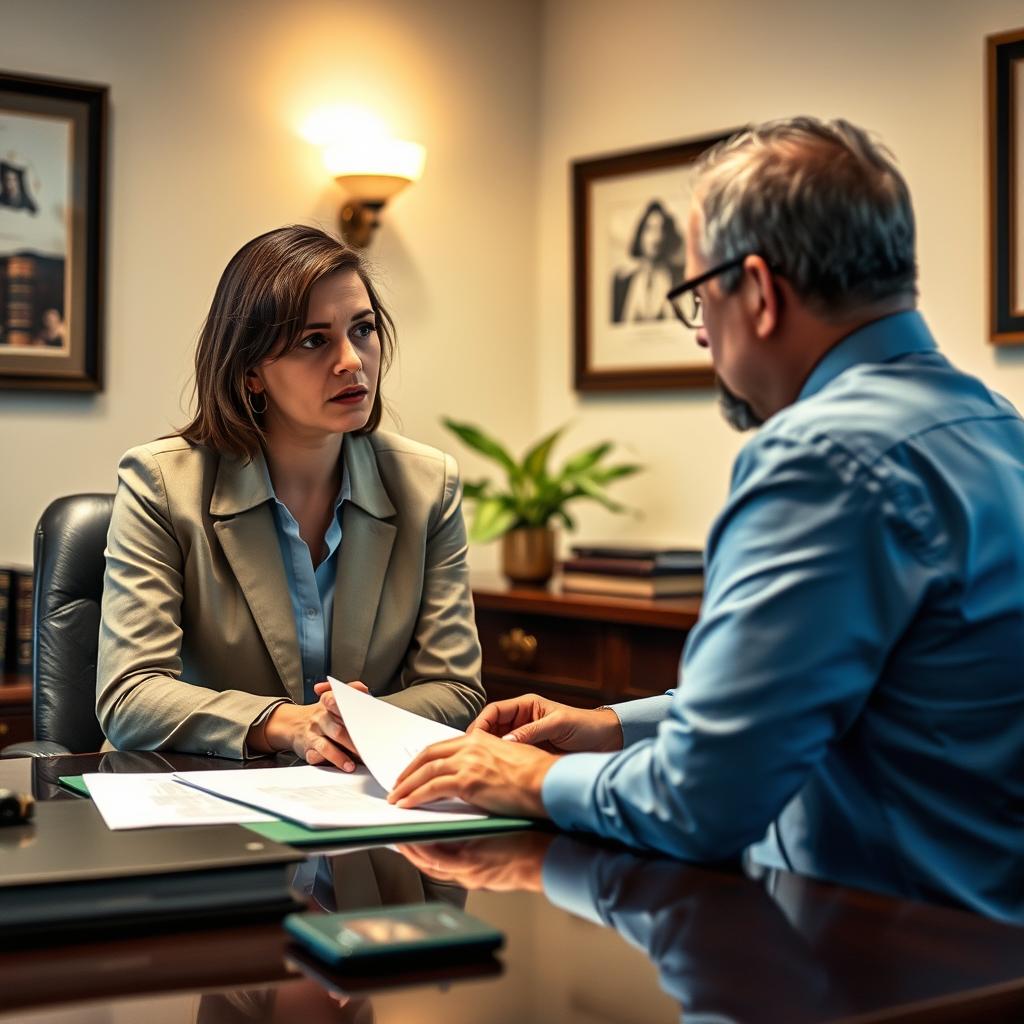
Partner Support Lawyer Rappahannock County, VA
You and your partner have separated, and financial uncertainty is weighing heavily on your mind. Perhaps you are struggling to cover essential expenses and wonder whether a court will order your former partner to help. Or you may be the higher-earning spouse who fears that a spousal support order will strip away financial security that took years to build. In Rappahannock County, Virginia, partner support—also known as spousal support or alimony—can be the most contentious and consequential part of a family law matter. Mr. Sris and his Of Counsel at Law Offices Of SRIS, P.C. represent clients in partner support disputes throughout Rappahannock County, bringing extensive combined legal experience to each case. Call (888) 437-7747 to request a consultation. Law Offices Of SRIS, P.C. – Advocacy Without Borders.
What Partner Support Means in Rappahannock County, Virginia
Partner support is a court-ordered payment from one spouse to the other during or after a divorce. In Virginia, spousal support is governed by Va. Code § 20-107.1, which directs the court to evaluate a series of statutory factors—including each party’s financial resources, needs, earning capacity, and the standard of living established during the marriage—when determining the appropriate amount and duration of support. Unlike child support, which follows a mathematical guideline formula, spousal support is highly fact-specific, giving the judge wide discretion.
In Rappahannock County, partner support matters are heard in the Rappahannock County Circuit Court if they arise as part of a divorce or equitable distribution proceeding. The court at 250 Gay Street, Suite 1, Washington, Virginia, handles all divorce-related orders, including pendente lite (temporary) spousal support. Separate child support and custody disputes are handled by the Rappahannock County Juvenile and Domestic Relations District Court, but a spousal support claim tied to a divorce is always a Circuit Court matter under Va. Code § 20-96. The firm’s Fairfax Location regularly serves clients who appear before the Rappahannock County courts, and Mr. Sris and his Of Counsel are familiar with how the judges of the Twentieth Judicial District apply the equitable-distribution and spousal-support statutes.
Because Rappahannock County is a rural jurisdiction with a smaller court calendar, case scheduling can differ from larger Northern Virginia counties, but the procedural rules remain the same. A spouse seeking support must file a pleading—usually as part of a Complaint for divorce—and may request a pendente lite hearing for temporary financial relief while the case is pending. The court may weigh factors such as the duration of the marriage, each spouse’s contributions to the family’s well‑being, tax consequences, and the circumstances that led to the dissolution of the marriage. Mr. Sris and his Of Counsel help clients present a compelling factual case that accounts for all relevant statutory considerations, whether they are requesting support or opposing an unfair demand for payment.
How Mr. Sris and His Of Counsel Approach Partner Support Cases
Every partner support case begins with a careful financial and factual analysis. The team reviews each spouse’s income, earning capacity, business interests, retirement assets, and the marital lifestyle, while also examining whether fault grounds—such as adultery or cruelty—could affect the support determination. Virginia law permits a court to consider fault when it is a proximate cause of the dissolution, so a party’s misconduct can influence the amount and duration of support.
Mr. Sris and his Of Counsel then craft a strategy tailored to the client’s goals. For a client who needs support, they work to document the marital standard of living, present a clear picture of financial need, and, if circumstances justify, seek a pendente lite award that provides interim relief while the divorce proceeds. For a client who is being asked to pay support, they scrutinize the other party’s claim, challenge inflated budgets, and explore whether an imputation of income or a vocational assessment could reduce the alleged need. When both parties are represented and the financial picture is relatively clear, a negotiated separation agreement that resolves spousal support can spare everyone the cost and stress of litigation. When an agreement is not possible, the team is prepared to litigate the issue actively, presenting evidence and cross-examining adverse witnesses at trial.
What to Expect When a Partner Support Issue Arises
If you are filing for divorce and you need spousal support, you will typically ask for it in your initial pleading—a Complaint filed in the Rappahannock County Circuit Court. The court may schedule a pendente lite hearing fairly promptly after a motion is filed, though the exact timing depends on the judge’s docket. At that hearing, the court will determine whether temporary support is warranted based on the immediate needs of the requesting spouse and the other spouse’s ability to pay, without a full trial on the merits.
Once a temporary order is in place, the parties proceed with discovery: exchanging financial documents, deposing witnesses, and, if necessary, hiring forensic accountants or business valuators for complex marital estates. Mediation is available but not mandatory in Virginia; many partner support disputes settle through negotiation because both sides gain certainty and avoid the unpredictability of a trial decision. If the case does not settle, the court will hear evidence and argument at a final hearing, consider the statutory factors under Va. Code § 20-107.1, and issue a final spousal support award that may be payable in periodic installments, a lump sum, or a combination of both.
After a final order is entered, modifications are possible only upon a showing of a material change in circumstances, such as a significant change in income, involuntary job loss, or the recipient’s remarriage or cohabitation under circumstances that warrant termination. Enforcement of a support order, if payments fall behind, can be pursued through the court’s contempt powers, which may include wage garnishment, license suspension, or even incarceration. Mr. Sris and his Of Counsel handle both modification and enforcement actions in Rappahannock County, helping clients adjust outdated orders or collect past-due support.
Meet Your Legal Team: Mr. Sris and His Of Counsel
Mr. Sris, Owner and Founder of Law Offices Of SRIS, P.C., is a former prosecutor who has built a multi-state family law practice since 1997. He is admitted in Virginia, Maryland, the District of Columbia, New Jersey, and New York, and he personally concentrates on complex family law matters, including high-stakes spousal support disputes. Mr. Sris testified before the Virginia House Courts of Justice Committee in support of 2019 HB 635 (chief patron Del. David Bulova), which revised statutory provisions related to the division of retirement assets in equitable distribution—legislation that reflects his thorough understanding of the financial issues attending divorce.
Assisting Mr. Sris is a team of Of Counsel attorneys who bring extensive combined legal experience between Mr. Sris and his Of Counsel. Their backgrounds include former service as a Maryland Assistant State’s Attorney, a Virginia State Trooper, and a long‑time contract attorney for a city child‑welfare agency, equipping the team with trial‑tested skills and a practical grasp of courtroom dynamics. Together, they have documented case results across all practice areas since 1997. Results may vary. The firm represents clients in Rappahannock County from its Fairfax Location, with consultations available by appointment at (888) 437-7747.
Frequently Asked Questions About Partner Support in Rappahannock County
What is partner support, and how is it different from child support?
Partner support—often called spousal support or alimony—is a court-ordered payment from one spouse to the other intended to help the receiving spouse maintain financial stability during or after a divorce. Unlike child support, which follows a formula that considers each parent’s gross income and the number of children, spousal support has no set calculation. The judge weighs multiple factors under Va. Code § 20-107.1, including the financial needs and resources of each party, the marital standard of living, the length of the marriage, and each spouse’s contributions to the family. Child support covers the expenses of raising children; spousal support is designed to address economic disparity between spouses.
How do Virginia courts decide the amount and duration of spousal support?
Courts apply the statutory factors listed in Va. Code § 20-107.1, evaluating each party’s income, earning capacity, age, health, the duration of the marriage, and the standard of living during the marriage, among other considerations. Unlike community-property states, Virginia is an equitable-distribution jurisdiction, meaning the court has broad discretion to tailor support to the facts of the specific case. Support may be awarded for a defined period—often called rehabilitative support—or indefinitely if one spouse cannot become self‑sufficient due to age, disability, or other factors. A judge may also reserve the right to determine future support in appropriate cases.
Can I get temporary spousal support while my divorce is pending?
Yes. The Rappahannock County Circuit Court may enter a pendente lite order that awards temporary spousal support while the divorce is being litigated. This provides immediate financial relief when one spouse needs help with living expenses and the other has the ability to pay. The court considers current needs, income, and the marital standard of living without making a permanent determination. A pendente lite hearing can be scheduled relatively quickly after a motion is filed, depending on the court’s docket, and the order remains in place until the final decree is entered.
What can I do if I cannot afford to pay the spousal support that was ordered?
You should not simply stop paying. The first step is to consult an attorney about filing a motion to modify the support order based on a material change in circumstances. If your income has dropped substantially due to job loss, illness, or other involuntary reasons, the court may lower or suspend payments. However, ignoring a support obligation can lead to contempt proceedings, wage garnishment, license suspension, and even jail time. Law Offices Of SRIS, P.C. helps clients in Rappahannock County seek timely modifications before arrears accumulate and enforcement actions begin.
Can spousal support be modified after the divorce is final?
Yes, unless the parties entered into a stipulation or agreement that expressly prohibits modification, the court retains the authority to increase, decrease, or terminate spousal support when a material change in circumstances is shown. Common grounds for modification include a substantial change in either party’s income, the recipient’s remarriage, or cohabitation in a relationship analogous to marriage. The burden of proof rests on the party seeking modification. A well‑documented motion, supported by current financial evidence, is essential, and an experienced attorney can help present the strong case to the court.
Do I need a lawyer for a spousal support matter in Rappahannock County?
While you are not legally required to hire a lawyer, the complexity of the statutory factors and the significant financial stakes make legal representation highly advisable. A spousal‑support award can affect your finances for years, and mistakes in presenting evidence or negotiating can lead to an unfair result. Mr. Sris and his Of Counsel at Law Offices Of SRIS, P.C. have extensive experience handling partner support issues in Virginia courts, including the Rappahannock County Circuit Court. To discuss your specific situation and learn how we can help, call (888) 437-7747.
Related Family Law Pages
- Family Law Lawyer Fairfax County, VA
- Family Law Lawyer Prince William County, VA
- Family Law Lawyer Loudoun County, VA
- Virginia Family Law Resources
Official Virginia Resources
- Virginia Code Title 20 – Domestic Relations
- Rappahannock County Combined Courts
- Virginia Judicial System
Request a Consultation
If you are facing a partner support issue in Rappahannock County, Virginia, the experienced legal team at Law Offices Of SRIS, P.C. is ready to help. Mr. Sris and his Of Counsel provide representation in spousal support matters from initial pleading through modification, enforcement, and appeal. To request a consultation, call (888) 437-7747 or contact our Fairfax Location. We serve clients in Washington, Sperryville, Flint Hill, and throughout Rappahannock County. Meetings are by appointment.