
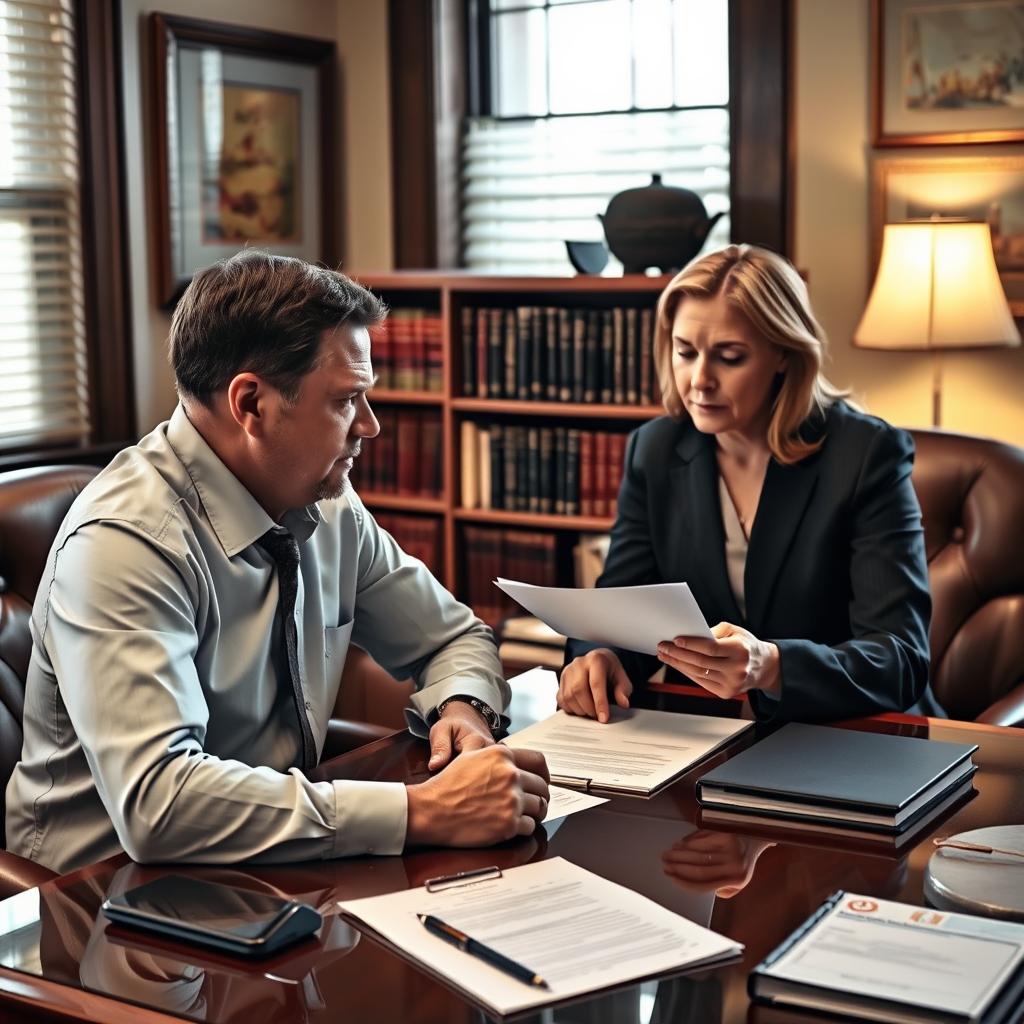
Felony Conviction Divorce Lawyer Goochland County, VA
When a spouse is convicted of a felony and sentenced to confinement for more than one year, Virginia law provides specific grounds for divorce under Va. Code § 20-91. For residents of Goochland County, this legal ground can serve as the basis for ending the marriage without the long waiting periods required in no‑fault divorces. Law Offices Of SRIS, P.C. represents clients in felony-conviction divorce matters across Goochland County, including the communities of Goochland, Crozier, and Oilville. Mr. Sris and his Of Counsel team bring extensive family-law experience to cases filed in the Goochland County Circuit Court. To discuss your situation, call (888) 437-7747 to request a consultation. Law Offices Of SRIS, P.C. — Advocacy Without Borders.
What Felony Conviction Divorce Means in Goochland County
Virginia is an equitable-distribution state, and a divorce grounded on a felony conviction is classified as a fault‑based divorce. Under Va. Code § 20-91(3), a court may grant a divorce from the bond of matrimony when one spouse has been sentenced to confinement for more than one year after a felony conviction. For Goochland County residents, this ground allows the filing spouse to proceed directly without satisfying the six‑month or one‑year separation period required for no‑fault divorces.
The Goochland County Circuit Court, located at 2938 River Road West, Bldg G, Goochland, VA 23063, has exclusive jurisdiction over divorce cases, including those alleging a felony‑conviction ground. The Juvenile and Domestic Relations District Court handles related custody and support matters. Because a felony conviction can bear on property division, spousal support, and child custody, a lawyer familiar with the local court’s expectations can help present evidence and frame arguments effectively. In Goochland County, the court considers statutory factors and the particular circumstances of each case, including the nature of the felony and its impact on the family.
How Mr. Sris and His Of Counsel Handle Felony Conviction Divorce Cases
Mr. Sris and his Of Counsel begin by reviewing the conviction record, the length of the sentence, and any available records from the criminal court. They then determine whether the felony‑conviction ground is the most appropriate path for the client — or, in some cases, whether alternative grounds might lead to a more favorable resolution of property and custody issues. The team’s approach emphasizes thorough preparation of the complaint, proper service on the incarcerated spouse (which may require coordination with correctional facilities), and presentation of evidence at the final hearing.
Because criminal convictions can affect equitable distribution and parenting time, Mr. Sris and his Of Counsel also collaborate with their clients to build a complete financial and custodial picture. They advise on the potential effects of a felony conviction on spousal support and child custody, and they work to protect the client’s interests during the pendency of the divorce. By handling the procedural complexity — from filing the complaint in Goochland County Circuit Court to presenting corroborating testimony at the hearing — they allow the client to move forward with clarity and focus.
About Mr. Sris and His Of Counsel Team
Mr. Sris, Owner and Founder of Law Offices Of SRIS, P.C., has been practicing law since 1997 and is admitted in Virginia, Maryland, the District of Columbia, New Jersey, and New York. His background as a former prosecutor informs his approach to family-law matters that intersect with the criminal justice system, such as felony‑conviction divorces. Mr. Sris testified before the Virginia House Courts of Justice Committee in support of 2019 HB 635 (chief patron Del. David Bulova), a measure that revised the commonwealth’s equitable‑distribution statute. His legislative insight benefits clients in matters involving complex property division.
Mr. Sris works alongside an Of Counsel team with diverse trial and litigation backgrounds. Together, they bring over 120 years of combined legal experience and have achieved 4,739+ documented firm-wide results. Results may vary. The team’s collective practice spans family law, criminal defense, and related fields, giving them a multi‑angle perspective on divorce cases affected by felony convictions. The firm’s Richmond location serves clients throughout Goochland County.
Frequently Asked Questions
What is a felony conviction divorce in Virginia?
A felony conviction divorce is a fault‑based divorce under Va. Code § 20-91(3) granted when one spouse is convicted of a felony and sentenced to confinement for more than one year. Unlike no‑fault divorces, which require separation periods of six months or one year, this ground allows the filing spouse to initiate proceedings immediately. The court still must address property distribution, support, and custody under standard Virginia law, but the felony conviction can influence the outcome of those issues.
Do I need a lawyer to file for a felony conviction divorce in Goochland County?
You are not legally required to have a lawyer, but legal representation is advisable when filing a fault‑based divorce grounded on a felony conviction. Serving an incarcerated spouse, gathering the correct criminal‑court records, and satisfying the court’s evidentiary requirements (including corroborating testimony) are procedural steps that an experienced attorney can manage. Mr. Sris and his Of Counsel handle these steps for clients in Goochland County and can guide you through each phase.
How long does a felony conviction divorce take in Goochland County?
The timeline depends on case‑specific factors such as court scheduling, the nature of the felony conviction, and whether the respondent spouse contests the divorce. Because no mandatory separation period applies, the case can move to a final hearing more quickly than a no‑fault proceeding. However, if custody, support, or property disputes arise, additional hearings may extend the process. Your attorney can provide a better estimate after reviewing the facts of your case.
Can the convicted spouse oppose the divorce?
Yes, the incarcerated spouse may file an answer and appear (or have counsel appear) to contest the divorce. The alleged felony‑conviction ground is still a ground for divorce, but the responding spouse may challenge the sufficiency of the evidence or raise defenses. The Goochland County Circuit Court will hear both sides and decide based on the evidence presented. Mr. Sris and his Of Counsel are prepared to address contested proceedings.
How does a felony conviction affect child custody in Virginia?
A felony conviction can affect custody decisions because Virginia courts determine custody based on the best interests of the child, considering factors such as parental fitness, history of abuse, and incarceration. While a conviction alone does not automatically forfeit parental rights, a court may limit or supervise visitation if it finds that the conviction poses a risk to the child’s welfare. Legal guidance is essential in presenting a custody argument that accounts for the conviction.
What court handles felony conviction divorce in Goochland County?
The Goochland County Circuit Court handles the divorce itself, including property division and spousal support. The Goochland County Juvenile and Domestic Relations District Court may address separate matters involving custody, visitation, and child support. Both courts are located at 2938 River Road West, Bldg G, Goochland, VA 23063. Mr. Sris and his Of Counsel appear in both courts and can coordinate your case across proceedings.
For guidance on your specific situation, reach Law Offices Of SRIS, P.C. at (888) 437-7747.
Related practice pages: Fairfax County Family Law · Prince William County Family Law · Manassas Family Law
Authority sources: Virginia Code Title 20 · Goochland County Circuit Court · SCC business entity filings
A divorce may be granted in Virginia when one spouse has been sentenced to confinement for more than one year for a felony.
Source: Va. Code § 20-91(3). Virginia Code § 20-91
Reviewed by Mr. Sris, admitted in VA/MD/DC/NJ/NY.
Circuit Courts have exclusive original jurisdiction over suits for divorce in Virginia.
Source: Va. Code § 20-96. Virginia Code § 20-96
Reviewed by Mr. Sris, admitted in VA/MD/DC/NJ/NY.
Attorney advertising. Prior results do not guarantee a similar outcome.
Case results depend on a variety of factors unique to each case. Results may vary.