
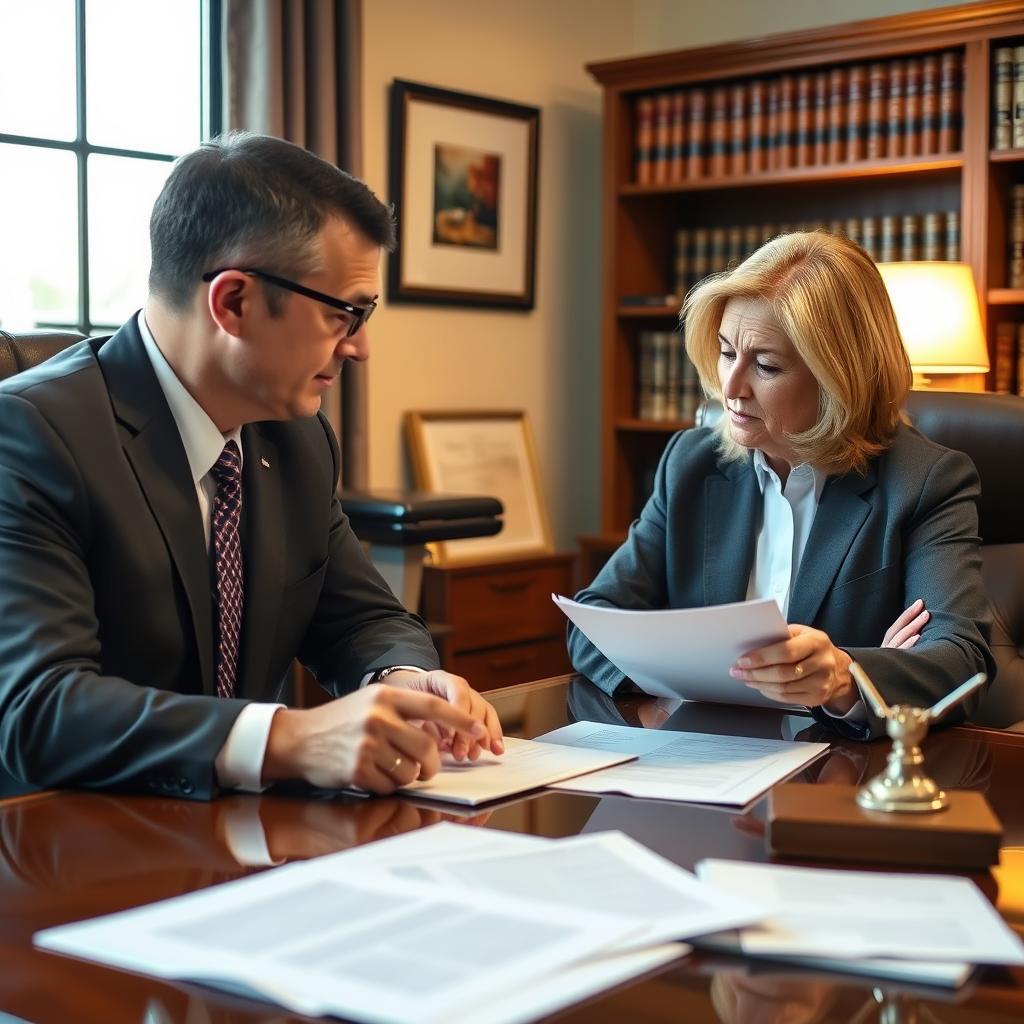
Establish Paternity Lawyer King William County, VA
Establishing paternity in King William County, Virginia, determines the legal father of a child. For a mother seeking child support, a father wanting a relationship with his child, or a child who needs access to benefits, paternity is the legal foundation. The process is governed by Virginia Code § 20-49.1 and following sections, and it directly affects custody, visitation, and support rights. In King William County, paternity matters are heard at the King William County Juvenile and Domestic Relations District Court and, when connected to a divorce, at the King William County Circuit Court. Law Offices Of SRIS, P.C. represents clients in both courts, and Mr. Sris and his Of Counsel team bring extensive experience in Virginia family law to every paternity proceeding. For a consultation about your situation, reach our Richmond Location at (888) 437-7747.
Law Offices Of SRIS, P.C. – Advocacy Without Borders.
What Establish Paternity Means in King William County, Virginia
Paternity establishment is the legal determination of a child’s biological father when the parents are not married. Under Virginia law, a child born to unmarried parents has no legal father until paternity is established. The process can be voluntary—through an Acknowledgment of Paternity signed by both parents—or court-ordered. In the Ninth Judicial District, to which King William County belongs, the Juvenile and Domestic Relations Court handles standalone paternity petitions, while the Circuit Court addresses paternity within divorce or equitable distribution actions. The courthouse is located at 351 Courthouse Lane, Suite 201, King William, VA 23086.
Once paternity is established, the father gains legal rights and responsibilities. These include the right to seek custody or visitation and the obligation to provide financial support. Child support guidelines under Virginia Code § 20-108.1 apply, and the court may order genetic testing if parentage is disputed. King William County is a rural community along the Mattaponi and Pamunkey rivers, with a more measured court calendar than urban localities, and thorough preparation before a hearing is important. Mr. Sris and his Of Counsel are familiar with the local procedures and can help clients navigate the process.
How Mr. Sris and His Of Counsel Handle Paternity Cases
Every paternity case begins with a careful review of the family’s circumstances. If paternity is uncontested, the firm assists with voluntary acknowledgment, including filing the necessary forms with the Virginia Department of Health’s Division of Vital Records. When parentage is disputed, Mr. Sris and his Of Counsel prepare the case for court, which may involve requesting genetic testing under Virginia Code § 20-49.1 et seq. The court can order DNA testing through an accredited laboratory, and the results are admissible as evidence.
The process also involves addressing related issues—custody, visitation, and child support—because a paternity order often becomes the gateway to these determinations. Mr. Sris and his team handle all aspects in a coordinated way, working to reach resolutions that serve the child’s best interests. Throughout the proceedings, the firm keeps clients informed about what to expect, from initial filing to any needed hearings. Because timelines vary depending on the court’s calendar and the complexity of the case, the attorney assigned to the matter provides a realistic assessment at the start.
About Mr. Sris and His Of Counsel Team
Mr. Sris is the Owner and Founder of Law Offices Of SRIS, P.C. He has represented clients in Virginia family law matters since 1997 and is admitted to practice in Virginia, Maryland, the District of Columbia, New Jersey, and New York. A former prosecutor, Mr. Sris brings courtroom experience to each case. He testified before the Virginia House Courts of Justice Committee in support of 2019 HB 635 (chief patron Del. David Bulova), a measure that addressed equitable distribution procedures. Mr. Sris and his Of Counsel bring over 120 years of combined legal experience and have achieved 4,739+ documented firm-wide results. Results may vary.
The Of Counsel attorneys who contribute to family law cases include lawyers with backgrounds as a former Maryland Assistant State’s Attorney, a former Virginia State Trooper, and a long‑time CPS contract attorney—each bringing distinctive perspective to case preparation. All work collectively under Mr. Sris’s direction to serve clients in King William County and across Virginia. For a consultation, reach our Richmond Location at (888) 437-7747.
Frequently Asked Questions
What does it mean to establish paternity in Virginia?
Establishing paternity means legally determining that a man is the biological father of a child born to unmarried parents. Once established, the father’s name can be added to the birth certificate, and he acquires legal rights and responsibilities, including the duty to support the child and the right to seek custody or visitation. In Virginia, paternity may be established voluntarily through an Acknowledgment of Paternity or by court order after genetic testing.
How does paternity affect child custody in King William County?
Paternity is a prerequisite for a father to seek custody or visitation rights in Virginia, unless the parents are married. After paternity is established, the King William County Juvenile and Domestic Relations Court can address custody and parenting time. The court considers the best interests of the child under Virginia Code § 20-124.3, evaluating factors like the child’s relationship with each parent, the needs of the child, and any history of abuse. The same court also determines child support under the Virginia guidelines.
Can the court order a paternity test in Virginia?
Yes, the court can order genetic testing when parentage is disputed. Under Virginia Code § 20-49.1, the court may direct the mother, alleged father, and child to submit to DNA testing conducted by an accredited laboratory. The results are admissible as evidence and can establish paternity with a high degree of accuracy. If a party refuses to comply, the court may draw an adverse inference.
Do I need a lawyer for a paternity case in King William County?
You are not legally required to have a lawyer, but the consequences of establishing—or failing to establish—paternity are far-reaching. A lawyer can ensure that the proper procedure is followed, that genetic testing is ordered when appropriate, and that related custody and support issues are fully addressed. Mr. Sris and his Of Counsel can explain your options and represent you in the King William County courts.
How long does a paternity case take in Virginia?
The timeline for a paternity case depends on whether the case is contested, the availability of genetic testing, and the court’s docket. An uncontested acknowledgment can be completed relatively quickly. A contested case requiring DNA testing and a hearing will take longer because of scheduling and processing times. The court sets the schedule, and Mr. Sris and his Of Counsel keep clients informed of expected milestones.
What should I bring to a consultation about a paternity matter?
Bring any documents that may help clarify the situation: the child’s birth certificate, any prior court orders involving the family, correspondence with the other parent, and identification for yourself. Also bring a list of questions you want to discuss. At the consultation, the attorney will review your circumstances, explain the legal options in Virginia, and outline the likely next steps. To schedule a consultation, call Law Offices Of SRIS, P.C. at (888) 437-7747.
For additional information, see our pages on Family Law in Fairfax County, Family Law in Prince William County, and Family Law in Manassas. For authoritative Virginia family law resources, visit Virginia Code Title 20, King William County Circuit Court, and Virginia’s Judicial System.
Attorney advertising. Prior results do not guarantee a similar outcome. Results may vary.
Case results depend on a variety of factors unique to each case.