
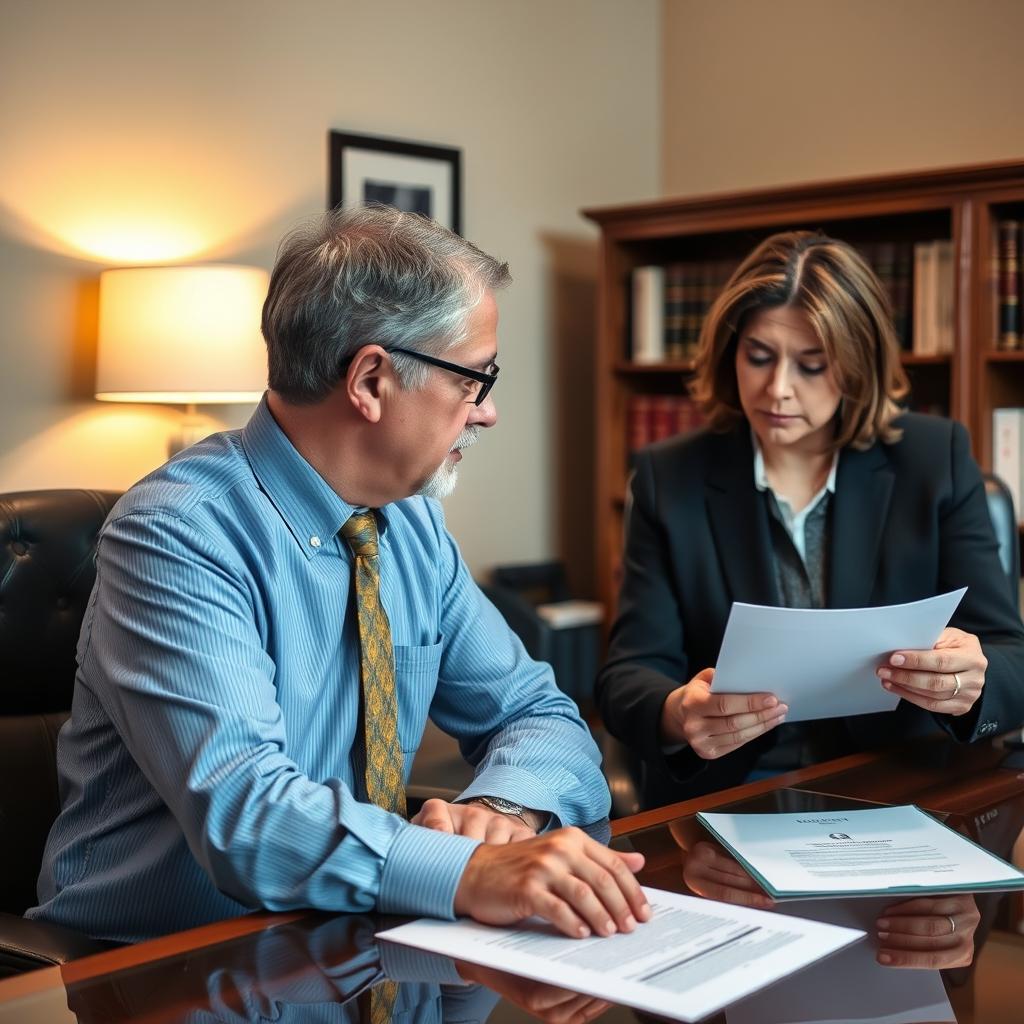
Property Settlement Lawyer Powhatan County, VA
You are sitting across the kitchen table from your spouse, a detailed list of everything you own spread out between you. The house, the retirement accounts, the business you built together, the debts you accumulated over the years — and now you have to decide who keeps what. The tension is palpable, and the decisions feel overwhelming. You are not alone. Many people in Powhatan County face exactly this challenge when a marriage ends. A property settlement lawyer can help you navigate the division of your marital estate and protect your financial future. To discuss your situation, reach Law Offices Of SRIS, P.C. at (888) 437-7747. Law Offices Of SRIS, P.C. – Advocacy Without Borders.
Strategy Options for Property Settlement in Powhatan County
Resolving property division does not have to mean a courtroom battle. In Powhatan County, you have several paths to reach a fair outcome. The approach you take will depend on the level of cooperation you and your spouse are able to maintain and the complexity of your assets.
Negotiation through a separation agreement. This is often the most cost-effective and private method. You and your spouse, with the help of your attorneys, negotiate the terms of a property settlement agreement. Once signed, the agreement becomes a binding contract, and the court can incorporate it into your final divorce decree. This works well when both parties are willing to exchange financial information openly and there is a genuine desire to reach a compromise. Mr. Sris and his Of Counsel work with clients to identify their priorities and build a proposal that protects their interests.
Mediation. A neutral third-party mediator helps you and your spouse communicate and explore settlement options. Mediation is not binding unless you reach an agreement that you both sign. Powhatan County Circuit Court encourages parties to consider alternatives to litigation. Many couples find that a structured mediation session, guided by an experienced mediator, allows them to fashion creative solutions that a judge might not be able to order. Even when emotions run high, a mediator can keep the conversation focused on the practical outcome.
Litigation in Powhatan County Circuit Court. If you and your spouse cannot agree, the judge must decide. The Circuit Court applies Virginia’s equitable distribution standard. Going to court is generally the longest and most expensive route, but it is sometimes the only way to resolve a stubborn disagreement over a business valuation, hidden assets, or the characterization of separate property. Mr. Sris and his Of Counsel provide representation throughout the litigation, from filing the complaint to presenting evidence at trial.
What to Expect During the Property Settlement Process
Property division in a Virginia divorce follows a structured sequence. Understanding the big picture can reduce anxiety and help you prepare for each step.
Gathering financial documents. The first step is assembling a complete picture of your marital estate. You will need to locate bank statements, tax returns, brokerage account statements, retirement plan documents, deeds, titles, loan documents, and credit card statements. If you or your spouse own a business, you may also need business tax returns, profit-and-loss statements, and balance sheets. Full and honest disclosure is essential; attempting to hide assets can severely damage your credibility with the judge.
Classifying property. Under Virginia law, property is classified as separate, marital, or hybrid. Separate property is generally what you owned before the marriage or received as a gift or inheritance during the marriage. Marital property is everything acquired during the marriage through the efforts of either spouse. Hybrid property may have both separate and marital components. Proper classification is the foundation of any property division; an error here can ripple through the entire settlement.
Valuation. Once you know what you own, you need to determine how much it is worth. Homes are appraised, retirement accounts are valued, and businesses may require a forensic accountant. If you and your spouse disagree on the value of an asset, each side may present expert testimony in court. Valuation disputes are common in high-net-worth cases where a small difference in a business’s value can translate into a large dollar swing.
Distribution. The final step is deciding who gets what. If you reach your own agreement, you have wide latitude to structure the division in a way that works for both of you. If the court decides, the judge will weigh the statutory factors and divide the marital estate in a way that is fair, though not necessarily equal. The judge’s order is final and binding unless you appeal.
Equitable Distribution in Virginia: What the Court Considers
Virginia is an equitable distribution state, not a community property state. That means marital property is divided in a way that a judge determines is fair — not automatically fifty-fifty. The framework is set out in Va. Code § 20-107.3, which lists the factors a Powhatan County Circuit Court judge will examine when making a property award.
The court considers each spouse’s monetary and non-monetary contributions to the family’s well-being, the duration of the marriage, the ages and physical condition of the parties, and the circumstances that led to the divorce. The judge also weighs how and when specific assets were acquired, the amount and nature of the debts, the tax consequences of the proposed division, and whether one spouse receives income-producing property while the other receives liquid assets. This balancing exercise gives the judge considerable discretion. That is why a carefully presented case, grounded in clear evidence about each factor, can significantly influence the outcome.
Separate property is not divided; it remains with the spouse who owns it. However, if separate property has increased in value due to marital contributions, that increase may be considered marital and subject to division. For example, if you owned a rental property before the marriage but your spouse helped manage it and you both contributed to renovations with marital funds, the appreciation attributable to those efforts could be part of the marital estate. These hybrid-asset situations often become the most contested issues in a Powhatan County property settlement.
About Mr. Sris and His Of Counsel Team
Mr. Sris, Owner and Founder of Law Offices Of SRIS, P.C., has practiced law since 1997. He is admitted in Virginia, Maryland, the District of Columbia, New Jersey, and New York. Mr. Sris and his Of Counsel bring extensive combined legal experience. Results may vary.
Mr. Sris’s background includes testimony before the Virginia House Courts of Justice Committee in support of 2019 HB 635 (chief patron Del. David Bulova), a bill that revised the equitable distribution statute. This firsthand engagement with the legislative process gives him a unique perspective on the law that governs your property settlement. The Of Counsel attorneys who support the firm’s family law practice are experienced professionals who work collaboratively with Mr. Sris. They understand the procedures of Powhatan County Circuit Court and the importance of thorough financial preparation. When you work with our firm, you benefit from a team approach that draws on extensive experience, careful analysis, and a focus on protecting your financial future. To schedule a consultation, contact Law Offices Of SRIS, P.C. at (888) 437-7747.
Frequently Asked Questions About Property Settlement in Powhatan County
Do I need a property settlement lawyer if my spouse and I agree on everything?
Even when you and your spouse agree, a property settlement lawyer helps ensure your agreement is legally sound and enforceable. Many couples outline their own deal, only to discover later that a poorly drafted agreement fails to transfer a retirement account correctly or leaves a debt that the creditor can still collect from both of them. An experienced attorney reviews the agreement for completeness and completeness, drafts the required legal documents, and ensures the settlement meets Virginia’s statutory requirements. The peace of mind that comes with knowing your rights are truly protected is well worth the investment.
What is the difference between a separation agreement and a property settlement agreement?
A separation agreement is a contract that resolves issues after separation, including property division; a property settlement agreement is the specific part that divides assets and debts. In Virginia practice, the two terms are often used interchangeably, but technically a separation agreement may also cover custody, visitation, and support. A property settlement agreement focuses on the marital estate. Both types of agreements can be incorporated into the final divorce decree, making them enforceable as a court order. The key is to have a comprehensive, well-drafted document that leaves no room for future disputes.
How does Powhatan County Circuit Court divide a business in a divorce?
The court does not physically cut a business in half; it determines the value of the business and offsets that value with other assets. If you and your spouse built a business during the marriage, the court will first classify the business as marital or separate property. If it is marital, the judge will need to assign a dollar value. That often requires a business valuation experienced attorney. The judge then awards the business to one spouse and gives the other spouse a greater share of other assets — such as the marital home, retirement accounts, or cash — to balance the ledger. In some cases, the court may order a buyout over time.
Can I keep my inheritance in a Powhatan County divorce?
An inheritance received during the marriage is your separate property and is not divided, as long as you kept it separate. Under Virginia law, gifts and inheritances from a third party are separate property. However, if you deposited the inheritance into a joint account, used it to pay marital expenses, or titled inherited real estate in both names, you may have converted it to marital property. Proper tracing of funds is critical. An experienced property settlement lawyer can help you document the history of your inheritance and argue for its separate treatment.
What if my spouse is hiding assets?
Asset hiding can be uncovered through a careful review of financial records, and the court can impose sanctions on a spouse who fails to disclose. During the divorce process, both spouses are required to provide complete financial disclosure. If you suspect your spouse is not being truthful, your attorney can request specific documents, depose your spouse under oath, and hire a forensic accountant to trace funds. If the court finds that a spouse intentionally concealed assets, the judge may award a larger share of the remaining marital estate to the other spouse as a remedy. Honesty is always the trusted policy.
How long does a property settlement take in Powhatan County?
The timeline for a property settlement varies depending on the complexity of your assets and the level of cooperation between the parties. An uncontested case in which both sides reach an agreement quickly can wrap up in a matter of months after filing. A heavily contested matter involving a business valuation, multiple expert witnesses, and a trial can take considerably longer. The court’s calendar also plays a role. Mr. Sris and his Of Counsel work to move your case forward while ensuring that no detail is overlooked.
Can a property settlement agreement be changed after the divorce is final?
Generally, a final property settlement agreement is a binding contract and cannot be modified, except for specific limited circumstances like fraud or mutual mistake. Unlike child support or custody, which can be modified based on a change in circumstances, property division is final once the divorce decree is entered. This is why it is so important to get the agreement right the first time. However, if you discover that your spouse lied about assets during the negotiations, you may have grounds to seek relief from the court. Speak with an attorney immediately if you suspect fraud.
Do retirement accounts get divided in a Virginia divorce?
Retirement accounts are marital property to the extent they were funded during the marriage, and they can be divided, but the process requires a special court order. A qualified domestic relations order (QDRO) is necessary to divide many types of retirement plans, including 401(k)s and certain pensions, without triggering early withdrawal penalties. The QDRO instructs the plan administrator to pay a portion of the benefits to the non-employee spouse. Drafting a compliant QDRO requires precision; an error can cause significant tax consequences. Mr. Sris and his Of Counsel ensure that all retirement-asset transfers are properly documented.
What is the role of a forensic accountant in a property settlement case?
A forensic accountant can trace funds, value a business, and identify hidden income or assets. In complex cases — such as those involving a closely held business, multiple investment accounts, or suspected undisclosed assets — a forensic accountant works with your attorney to paint an accurate picture of the marital finances. The accountant’s report can be used in settlement negotiations or presented as evidence at trial. The cost of bringing in such an experienced attorney must be weighed against the potential benefit, but in many high-value cases, the investment yields a substantially more favorable outcome.
How do I start the property settlement process with Law Offices Of SRIS, P.C.?
Contact our firm at (888) 437-7747 to schedule a consultation. During your initial meeting, you will speak with an experienced professional about your situation, learn how Virginia’s equitable distribution laws apply to your assets, and discuss the strategic options available to you. We serve clients in Powhatan County from our Richmond Location at 7400 Beaufont Springs Drive, Suite 300, Room 395, Richmond, Virginia. Meetings are by appointment only. We can help you understand what to expect and begin building a plan to protect your financial interests.
For a comprehensive analysis of the statutory framework that governs property division in Virginia, you may wish to review the detailed discussion on our main website: Virginia Divorce & Property Division Overview.
Law Offices Of SRIS, P.C.
Richmond Location
7400 Beaufont Springs Drive, Suite 300, Room 395
Richmond, VA 23225
(888) 437-7747
By appointment only. Call to schedule.
Attorney advertising. Prior results do not guarantee a similar outcome.
Results may vary.
Case results depend on a variety of factors unique to each case.