
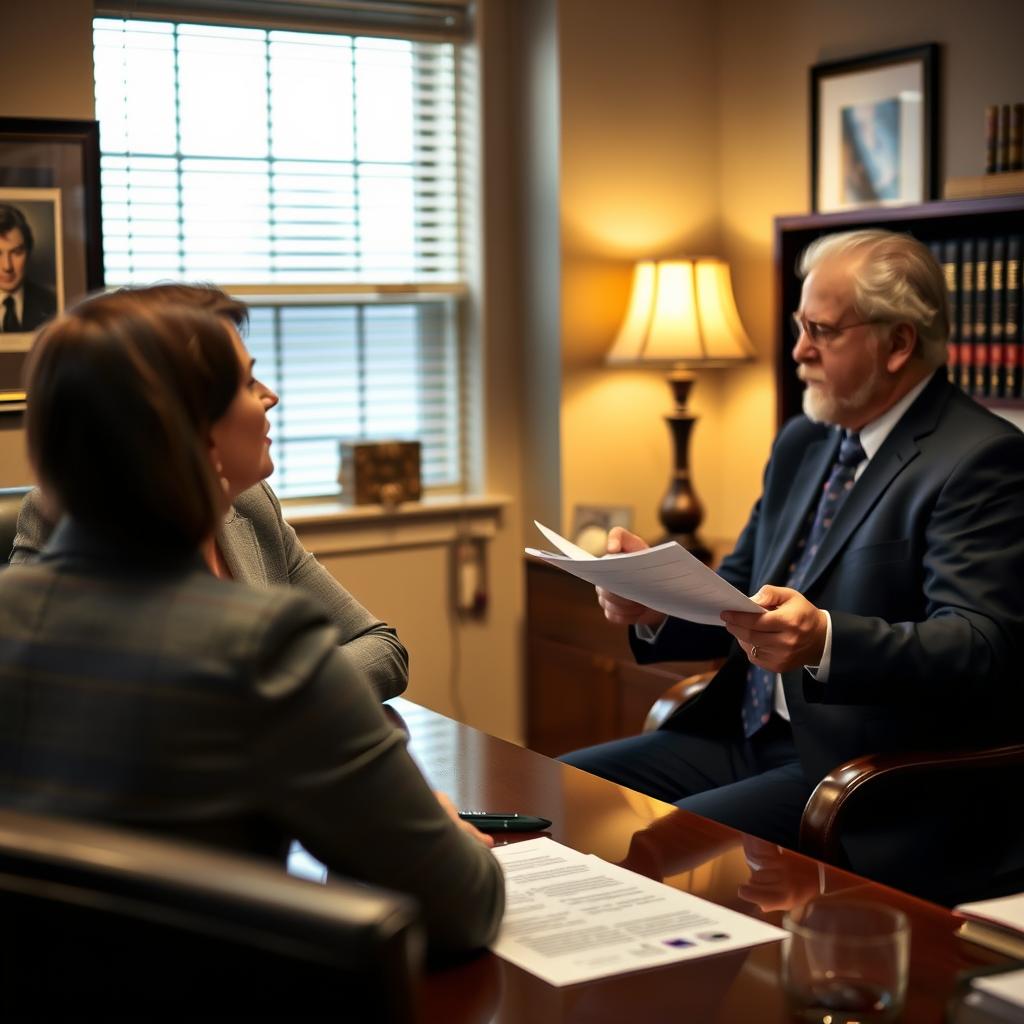
Postnuptial Agreement Lawyer Rockingham County, VA
A postnuptial agreement can provide clarity and protection for married couples in Rockingham County, Virginia — especially when property division, spousal support, and other financial issues later become contentious. Law Offices Of SRIS, P.C., founded in 1997, advises clients throughout the Shenandoah Valley on enforceable postnuptial arrangements under the Virginia Premarital Agreement Act. Whether you and your spouse are seeking to define property rights, protect separate assets, or establish financial expectations during a long-term marriage, an experienced family law attorney can help you draft an agreement that reflects your mutual intent and is likely to withstand court scrutiny. Mr. Sris and his Of Counsel team appear before the Rockingham County Circuit Court and are familiar with the local practices that affect the enforceability of postnuptial agreements. To discuss your situation and explore whether a postnuptial agreement is right for you, reach Law Offices Of SRIS, P.C. at (888) 437-7747 to request a consultation. Law Offices Of SRIS, P.C. – Advocacy Without Borders.
What a Postnuptial Agreement Means in Rockingham County, Virginia
In Virginia, postnuptial agreements — also called marital agreements — are governed by the Premarital Agreement Act, codified at Va. Code § 20‑147 et seq. Although originally written for premarital agreements, the Act also applies to agreements signed after marriage, provided they are executed voluntarily and with full financial disclosure. A valid postnuptial agreement allows spouses to define how their property, debts, and spousal support will be treated in the event of separation or divorce, and can simplify the equitable distribution process under Va. Code § 20‑107.3.
Rockingham County family law matters involving divorce, equitable distribution, and spousal support are heard in the Rockingham County Circuit Court, located at 53 Court Square in Harrisonburg. The court will generally enforce a postnuptial agreement unless a party demonstrates that the agreement was unconscionable when executed, or that enforcement would be inequitable due to changed circumstances. Our Shenandoah/Woodstock location regularly handles postnuptial agreement cases for clients in Harrisonburg, Bridgewater, Dayton, Elkton, Timberville, Broadway, and the surrounding communities. Because Rockingham County has a significant agricultural, university, and small‑business presence, postnuptial agreements often address unique assets such as family farms, closely held businesses, and professional practices — all of which benefit from careful, locally informed drafting.
How Mr. Sris and His Of Counsel Handle Postnuptial Agreement Cases
Every postnuptial agreement begins with a thorough understanding of the couple’s assets, liabilities, and long-term objectives. Mr. Sris and his Of Counsel conduct detailed interviews with each spouse, review financial documents, and identify points of agreement and potential dispute. Because Virginia law requires that both parties enter the agreement voluntarily and with a reasonable disclosure of financial circumstances, the firm works methodically to ensure that the process is transparent and free from duress or overreaching. Where one spouse has significantly greater assets or income, our approach includes building an evidentiary record that demonstrates fairness and informed consent.
After the initial consultation, the firm drafts a tailored agreement that addresses property classification, management of marital and separate property during the marriage, allocation of debts, and — where applicable — post‑divorce spousal support. Because the Rockingham County Circuit Court retains jurisdiction over any future divorce, the agreement is written with an eye toward how a local judge would interpret its terms under Virginia’s equitable distribution framework. When both sides are represented by separate counsel, the firm frequently negotiates the final language; when the other spouse is unrepresented, we recommend that the spouse seek independent legal advice to strengthen the agreement’s enforceability. Throughout the process, Mr. Sris and his Of Counsel focus on practical, durable solutions rather than active posturing — an approach that often results in a signed agreement without the need for contested litigation.
About Mr. Sris and His Of Counsel Team
Mr. Sris, Owner and Founder of Law Offices Of SRIS, P.C., began his legal career as a former prosecutor before founding the firm in 1997. His multi‑state practice now includes admissions in Virginia, Maryland, the District of Columbia, New Jersey, and New York. Mr. Sris testified before the Virginia House Courts of Justice Committee in support of 2019 HB 635 (chief patron Del. David Bulova), a bill that revised the equitable distribution statute that often intersects with postnuptial agreements. That firsthand experience with the legislative process informs the firm’s strategic drafting — an understanding not only of what the law says today, but how it can evolve.
Mr. Sris and his Of Counsel bring extensive combined legal experience to every family law matter. Mr. Sris and his Of Counsel have documented case results across all practice areas since 1997. Results may vary. All non‑owner attorneys serve as Of Counsel — experienced practitioners who collaborate with Mr. Sris on case strategy and who have extensive knowledge of Virginia’s domestic relations code. The team provides clients with accessible, responsive guidance from the first phone call through the signing of the final agreement.
Frequently Asked Questions
Are postnuptial agreements enforceable in Virginia?
Yes, postnuptial agreements are generally enforceable in Virginia under the Premarital Agreement Act (Va. Code § 20‑147 et seq.) when they are signed voluntarily and with adequate financial disclosure. The court will examine whether the agreement was unconscionable when made and whether enforcement would be unfair due to changed circumstances — a standard that often turns on the quality of the process used to create the agreement. Agreements that are transparent, negotiated in good faith, and documented with the advice of independent counsel are far more likely to be upheld in Rockingham County Circuit Court.
What makes a postnuptial agreement valid under Virginia law?
For a postnuptial agreement to be valid in Virginia, both spouses must sign it voluntarily, and there must be a fair and reasonable disclosure of each party’s financial situation — or an express waiver of such disclosure. The agreement must not be the product of fraud, duress, or misrepresentation. While the statute does not mandate independent legal representation, a court is far more likely to uphold an agreement when each side received separate legal advice. The firm structures every postnuptial agreement to meet these statutory and common‑law standards, reducing the risk of later challenge.
Can a postnuptial agreement be challenged in Rockingham County?
Yes, a postnuptial agreement can be challenged in Rockingham County Circuit Court during a divorce or separation proceeding. Common grounds for challenge include lack of voluntary execution, insufficient financial disclosure, unconscionability at the time of signing, or a substantial change in circumstances that would make enforcement inequitable. Because the same judge who presides over the divorce will rule on the agreement’s enforceability, careful drafting that accounts for local judicial practice is essential. Mr. Sris and his Of Counsel anticipate potential challenge points and build defensive measures into every agreement they prepare.
Do I need a lawyer to draft a postnuptial agreement?
Virginia law does not require you to hire a lawyer to draft a postnuptial agreement, but legal representation substantially increases the likelihood that the agreement will be enforceable. A knowledgeable attorney can ensure that the agreement complies with the Premarital Agreement Act, addresses all relevant categories of property, and includes the disclosures and protections that courts expect. The firm also helps clients navigate sensitive conversations with their spouse and recommends that the other party consult independent counsel, which further bolsters the agreement’s validity.
How does a postnuptial agreement affect a divorce in Rockingham County?
A properly executed postnuptial agreement can streamline the divorce process in Rockingham County by eliminating contested issues over property classification, valuation, and spousal support. Instead of litigating equitable distribution under Va. Code § 20‑107.3, which considers eleven discretionary factors, the court will often defer to a valid agreement. This can shorten the time needed to finalize a divorce and reduce legal fees. The firm helps clients draft agreements that are clear, comprehensive, and tailored to the specific assets they own — from residential real estate to retirement accounts and family businesses.
What happens if we don’t have a postnuptial agreement?
Without a postnuptial agreement, Virginia’s equitable distribution statute controls the division of marital property and the award of spousal support in a divorce. The court will classify property as marital, separate, or hybrid, value each item, and distribute the marital estate based on eleven statutory factors — a process that can be unpredictable and expensive. A postnuptial agreement removes that uncertainty by defining the couple’s own rules. Even couples with relatively straightforward finances often find that an agreement provides peace of mind and preserves relationships by resolving financial questions in advance.
You may also find these nearby family law resources helpful:
- Clarke County family law attorney
- Shenandoah County family law representation
- Frederick County family law services
- Warren County family law counsel
- Augusta County family law practice
For additional primary legal authority concerning postnuptial agreements and Virginia domestic relations, see the following official sources:
Attorney advertising. Prior results do not guarantee a similar outcome.
Case results depend on a variety of factors unique to each case.
Results may vary.