
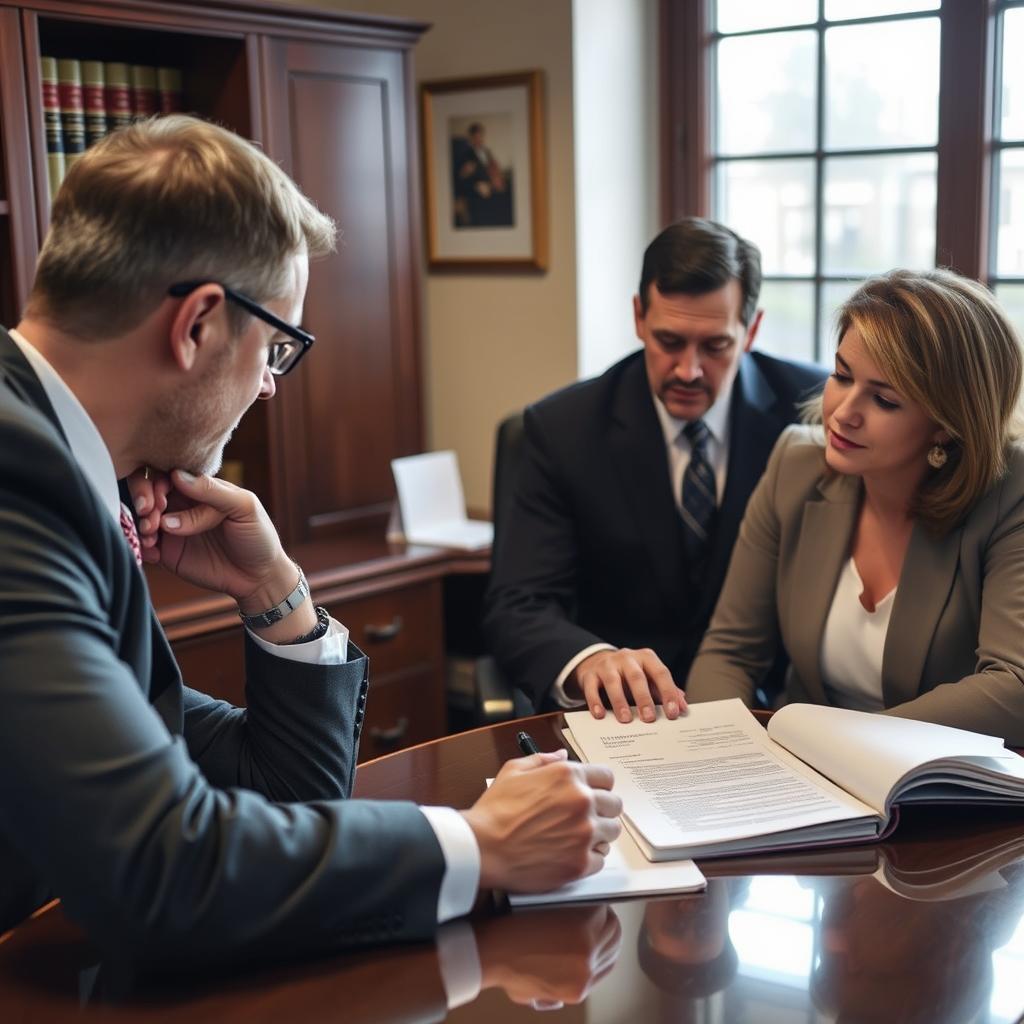
Felony Conviction Divorce Lawyer New Kent County, VA
Under Virginia law, a spouse’s felony conviction sentence of more than one year is a fault‑based ground for divorce. If your spouse has been incarcerated on a felony, you may proceed with a divorce on that basis without waiting for a no‑fault separation period. Law Offices Of SRIS, P.C. represents individuals seeking a divorce based on the spouse’s felony conviction in New Kent County, Virginia. The New Kent County Circuit Court at 12001 Courthouse Circle, New Kent, VA 23124, handles all divorce filings, including those asserting fault grounds under Va. Code § 20‑91(3). Our Richmond location serves clients throughout New Kent, Providence Forge, and Quinton. For a confidential consultation, call (888) 437‑7747. Law Offices Of SRIS, P.C. — Advocacy Without Borders.
How a Felony‑Conviction Divorce Works in New Kent County
Virginia is a mixed no‑fault and fault divorce state. The felony‑conviction ground — sentencing to confinement of more than one year for a felony — allows a spouse to file for divorce immediately upon the sentencing, without any separation period. The statute also recognizes other fault grounds, such as adultery, cruelty, and desertion, but the felony‑conviction ground often applies when the incarcerated spouse is serving a significant sentence. The court must still determine that the grounds have been proven before granting the divorce.
In New Kent County, divorce complaints are filed in the Circuit Court. The court will also resolve related issues — equitable distribution of marital property, spousal support, and if applicable, child custody and support. Because a felony conviction and incarceration can affect asset division and support obligations, having an experienced attorney to present your case before the court is important. Law Offices Of SRIS, P.C. Regularly appears in the New Kent County Circuit Court and the New Kent County Juvenile and Domestic Relations District Court for related matters.
Frequently Asked Questions
What does “felony conviction divorce” mean in Virginia?
A felony conviction divorce is a divorce obtained using the spouse’s felony incarceration as a statutory fault ground under Virginia law. Under Va. Code § 20‑91(3), the court may grant a divorce when one spouse has been sentenced to confinement for more than one year for a felony, and the other spouse no longer cohabits with the incarcerated spouse after learning of the confinement. This ground does not require a separation period. The divorce may still involve issues of property division, spousal support, and child‑related matters.
Do I need a lawyer for a felony‑conviction divorce in New Kent County?
You are not required to have a lawyer, but legal guidance helps ensure the grounds are properly pleaded and all related issues are addressed. The complaint must allege the specific statutory ground and the facts supporting it. A lawyer experienced in Virginia family law can prepare the necessary pleadings, present corroborating evidence, and represent you at any hearings. Law Offices Of SRIS, P.C. handles divorce cases on fault grounds and can assist you at every stage.
How does the process work in New Kent County Circuit Court?
The process starts by filing a complaint for divorce in the New Kent County Circuit Court, serving the incarcerated spouse, and presenting evidence to the judge. If the felony‑conviction ground is proven, the court may enter a decree of divorce. Issues of property division, support, and custody are resolved either by agreement or by trial. Our Richmond location assists clients with each step — from drafting the complaint to appearing at the final hearing at 12001 Courthouse Circle, New Kent.
What if my spouse is incarcerated out of state?
Virginia courts can still grant a divorce based on felony conviction if the residency requirement is met and the spouse was sentenced under any jurisdiction’s law for a felony. The statute does not require that the conviction occurred in Virginia. You must be a resident of Virginia for at least six months before filing. Service of process on an out‑of‑state incarcerated spouse must comply with Virginia’s long‑arm rules and the rules of the custodial institution.
Does a felony conviction affect property division or alimony?
The conviction itself is not an automatic bar to marital property or support, but the circumstances may influence the court’s equitable distribution analysis and spousal support award. Virginia courts divide marital property equitably under Va. Code § 20‑107.3, considering factors such as the length of the marriage, contributions, and the reasons for the dissolution. The felony conviction may also be relevant if the incarcerated spouse’s criminal conduct dissipated marital assets.
How long does a felony‑conviction divorce take in New Kent County?
The timeline varies by case but generally is shorter than a no‑fault divorce because no separation period is required. After filing the complaint, the court schedules a hearing. If all issues are uncontested — including property and support — the divorce may be finalized within a few months. Contested matters can extend the timeline. The court’s calendar and the complexities of the case determine the exact duration. For specific guidance, contact Law Offices Of SRIS, P.C. at (888) 437‑7747.
Can I still use the no‑fault ground if my spouse was convicted?
Yes. You may choose to file under a no‑fault ground instead — a one‑year separation or a six‑month separation with a signed property settlement agreement and no minor children. The existence of a fault ground does not compel you to use it. An attorney can help evaluate whether pursuing the felony‑conviction ground offers strategic advantages, such as a faster decree or a more favorable property outcome. The choice depends on your goals and the facts of your case.
What should I bring to a consultation about a felony‑conviction divorce?
Bring the spouse’s sentencing order, any divorce‑related documents, and a list of marital assets and debts. The sentencing order establishes the conviction and the length of confinement. Also provide information about the marriage date, children, income, and any existing separation agreement. This allows Law Offices Of SRIS, P.C. to assess the viability of the fault ground and the overall scope of your case. To schedule a consultation, call (888) 437‑7747.
How does child custody work when one parent is incarcerated?
Custody is determined by the best interests of the child and the parent’s ability to care for the child, not by the felony conviction alone. While incarceration is a factor, Virginia courts consider all circumstances under Va. Code § 20‑124.3, including the parent‑child relationship, the child’s needs, and each parent’s role. The custodial parent may request sole custody or supervised visitation for the incarcerated spouse. The New Kent County Juvenile and Domestic Relations District Court handles standalone custody petitions.
What happens if my spouse is released during the divorce?
The court retains jurisdiction to proceed with the divorce on the fault ground as long as the facts existed at the time of filing. The ground is based on the sentencing to a term of more than one year, not on the spouse’s current incarceration status. If your spouse is released, the divorce can still continue on that ground, and related matters of support and property division remain before the court.
Can a felony‑conviction divorce affect immigration status?
A divorce alone does not directly change immigration status, but it can affect conditional residency or a pending petition if the marriage was the basis. If you have a conditional green card through marriage and your spouse is convicted of a felony, you may still be eligible to seek a waiver of the joint‑filing requirement. The interplay between family law and immigration can be complex, so consulting an attorney about both aspects is advisable. Law Offices Of SRIS, P.C. can address the family law side of the matter.
How do I find a felony conviction divorce lawyer near New Kent County?
Reach Law Offices Of SRIS, P.C. at (888) 437‑7747 to schedule a consultation about a felony‑conviction divorce in New Kent County. Our Richmond location at 7400 Beaufont Springs Drive, Suite 300, Room 395, Richmond, VA 23225, serves New Kent County and the surrounding communities. Mr. Sris and his Of Counsel bring over 120 years of combined legal experience to family law matters, backed by 4,739+ documented firm-wide results. Results may vary. Contact us today to discuss your situation.
About Mr. Sris and His Of Counsel Team
Mr. Sris, Owner and Founder of Law Offices Of SRIS, P.C., has practiced family law for over 28 years. He is a former prosecutor and is admitted in Virginia, Maryland, the District of Columbia, New Jersey, and New York. Mr. Sris testified before the Virginia House Courts of Justice Committee in support of 2019 HB 635 (chief patron Del. David Bulova). He and his Of Counsel team handle divorce matters involving fault grounds, including felony conviction, throughout Virginia. All Of Counsel are non‑employee attorneys engaged through Excella.
Additional Resources
Law Offices Of SRIS, P.C.
Richmond Location
7400 Beaufont Springs Drive, Suite 300, Room 395
Richmond, VA 23225
Phone: (888) 437‑7747
By appointment only. Call to schedule.
Attorney advertising. Prior results do not guarantee a similar outcome. Results may vary. Mr. Sris is responsible for the content of this advertisement.
Case results depend on a variety of factors unique to each case.