
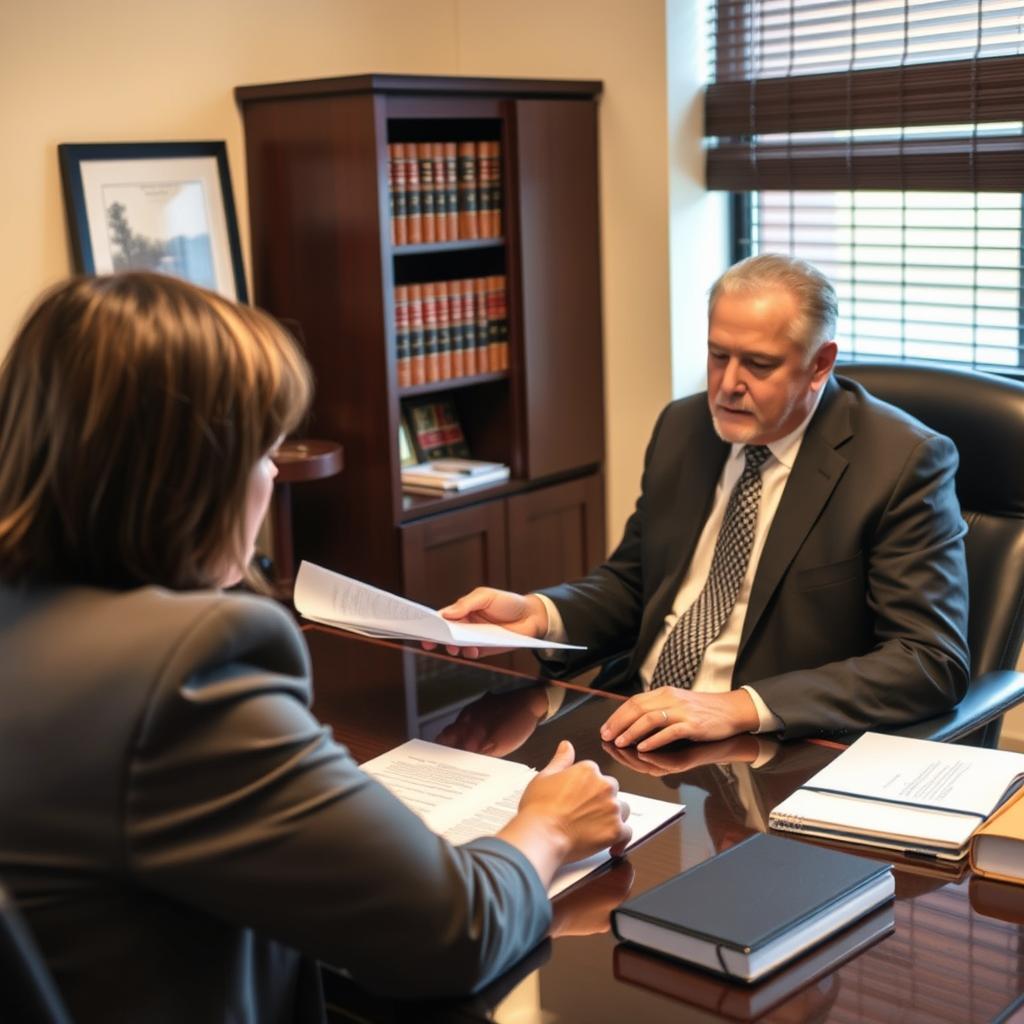
Desertion Divorce Lawyer Dinwiddie County, VA
When a spouse walks out and refuses to return, the abandonment can feel as final as a courtroom door closing. You may be left raising children alone, managing a household on one income, and wondering whether Virginia law recognizes desertion as a reason to end the marriage. In Dinwiddie County, willful desertion or abandonment for one year is a fault ground for divorce under Virginia Code § 20‑91. The Dinwiddie County Circuit Court at the Dinwiddie Courthouse handles divorce, equitable distribution, and spousal support matters, while the Dinwiddie County Juvenile and Domestic Relations District Court addresses custody, visitation, support, and protective orders. Mr. Sris and his Of Counsel team represent individuals seeking a divorce based on desertion throughout Dinwiddie County, including the communities of Dinwiddie and McKenney. Our Richmond location serves clients at the Dinwiddie County courts. To discuss your situation, reach Law Offices Of SRIS, P.C. at (888) 437‑7747. Law Offices Of SRIS, P.C. — Advocacy Without Borders.
What Desertion Divorce Means in Dinwiddie County
Desertion is one of several fault‑based grounds for divorce in Virginia. Under Virginia law, a spouse may file for divorce when the other spouse has willfully deserted or abandoned the marital relationship for a continuous period of one year. The desertion must be intentional, without justification, and with the intent to end the marriage. The statutory language does not require physical separation alone; it also encompasses a spouse’s refusal to resume cohabitation after a temporary absence.
Under Va. Code § 20‑91, willful desertion or abandonment for one year is a fault ground for divorce.
Source: Va. Code § 20‑91. Virginia Law Portal
Reviewed by Mr. Sris, admitted in VA/MD/DC/NJ/NY.
In Dinwiddie County, divorce proceedings are heard in the Circuit Court. The court also determines equitable distribution of marital property, spousal support, and, if children are involved, child custody and support as part of the divorce decree. Because Virginia is an equitable distribution state, marital assets are divided fairly, though not necessarily equally, after the court classifies property as separate, marital, or hybrid. Matters of child custody, visitation, and support that arise outside a divorce are handled in the Juvenile and Domestic Relations District Court.
The practical effect of proving desertion can influence the division of marital property and the availability of spousal support. A spouse’s misconduct, including desertion, is one of the factors the court may weigh when fashioning an equitable distribution award. However, a fault ground is not automatically a ticket to a more favorable financial outcome; the court balances multiple statutory factors. Working with an attorney who understands how desertion evidence is presented in Dinwiddie County courts helps ensure your case is framed effectively.
How Mr. Sris and His Of Counsel Handle Desertion Divorce Cases
Mr. Sris and his Of Counsel approach a desertion‑based divorce by first gathering the factual record: when the spouse left, the circumstances surrounding the departure, any attempts at reconciliation, and the ongoing living situation. They then evaluate whether the facts support the one‑year desertion requirement under Va. Code § 20‑91 and whether the evidence is sufficient to present a clear and convincing case to the Circuit Court.
If the parties do not have minor children and have a signed separation agreement, Virginia law also allows a no‑fault divorce after a six‑month separation, which can sometimes be a faster route. Mr. Sris and his team examine all available grounds to advise you on the most appropriate path. Throughout the process, they handle filing the complaint, service of process, pendente lite motions for temporary support or custody if needed, and negotiation or litigation of property division, spousal support, and parenting arrangements. The timeline for resolution depends on the court’s calendar, the complexity of the marital estate, and whether the matter is contested.
About Mr. Sris and His Of Counsel Team
Mr. Sris, Owner and Founder of Law Offices Of SRIS, P.C., has been practicing since 1997. A former prosecutor, he is admitted in Virginia, Maryland, the District of Columbia, New Jersey, and New York. Mr. Sris testified before the Virginia House Courts of Justice Committee in support of 2019 HB 635 (chief patron Del. David Bulova). His background provides firsthand insight into courtroom dynamics and the strategic presentation of evidence. He is supported by a team of experienced Of Counsel attorneys who bring over 120 years of combined legal experience, with 4,739+ documented results. Results may vary.
Frequently Asked Questions
What is considered desertion under Virginia divorce law?
Desertion is the willful, unjustified, and continuous abandonment of the marital relationship by one spouse for one year. The desertion must be intentional and without the consent of the other spouse. A temporary absence does not qualify, and a spouse who leaves for a legitimate reason—such as military deployment or employment relocation with the other spouse’s agreement—is not deserting. The one‑year clock runs from the date the abandoning spouse leaves and refuses to return. Evidence such as witness testimony, correspondence, and financial records can help establish the desertion.
How long must the desertion last before I can file for divorce?
Virginia law requires that the desertion continue for a full year before a divorce may be granted on that ground. The one‑year period must be uninterrupted. If the spouse returns and resumes the marriage even briefly, the clock may reset unless the return is merely a pretext to defeat the desertion claim. You may file the complaint as soon as the statutory period has run, but the divorce cannot be finalized until the Circuit Court issues a decree. An experienced attorney can help you determine when the desertion period began and whether the facts support a fault‑based filing.
Can I file for desertion divorce in Dinwiddie County if my spouse now lives out of state?
You may file in Dinwiddie County so long as you or your spouse meets Virginia’s residency requirement of being a domiciliary and resident for at least six months. If your spouse has moved away, the Circuit Court can still exercise jurisdiction over the divorce if you are a Virginia resident. Service of process on an out‑of‑state spouse must comply with Virginia’s long‑arm jurisdiction rules and may require methods such as certified mail, private process server, or, if necessary, service by publication. Mr. Sris and his Of Counsel handle multi‑state divorce matters and can advise you on the proper service procedures.
Does proving desertion affect property division or spousal support?
Proving desertion can influence the court’s equitable distribution award and spousal support determination, but it does not guarantee a particular result. Under Virginia’s equitable distribution statute, the court considers fault, including desertion, as one factor among eleven. A spouse who deserted the marriage may receive a smaller share of marital property or be ordered to pay spousal support. However, the court’s primary focus is on fairness, and a history of desertion is weighed alongside the duration of the marriage, each spouse’s financial circumstances, and contributions to the family. An attorney can help you present the desertion evidence in a way that supports your position on property and support.
What if my spouse left but claims I forced them out?
A spouse who claims they were constructively forced to leave may argue that the departure was not willful desertion. Virginia courts examine whether the leaving spouse’s actions were voluntary and whether the remaining spouse’s conduct made the home unsafe or intolerable. If the spouse who departed can show that they were driven out by cruelty or other misconduct, the court may find that desertion did not occur. Conversely, if the remaining spouse can demonstrate that the departure was unjustified, the desertion ground remains viable. The specific facts of your living situation and any history of domestic disputes will be central to the court’s evaluation.
How do I start a desertion divorce case with your firm?
Contact Law Offices Of SRIS, P.C. at (888) 437‑7747 to schedule a consultation. During the consultation, an attorney will review the timeline of your spouse’s departure, any attempts at reconciliation, and your overall goals regarding property, support, and children. The firm will then advise you on the trusted grounds for divorce under Virginia law and explain the steps from filing the complaint to final decree. Our Richmond location serves clients in Dinwiddie County, and we represent individuals across all family law matters. By‑appointment meetings are available; call to arrange yours.
Primary sources: Virginia Code Title 20 · Virginia Courts
Attorney advertising. Prior results do not guarantee a similar outcome. Results may vary.
Case results depend on a variety of factors unique to each case.